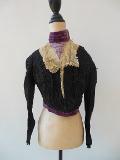

Reproduction
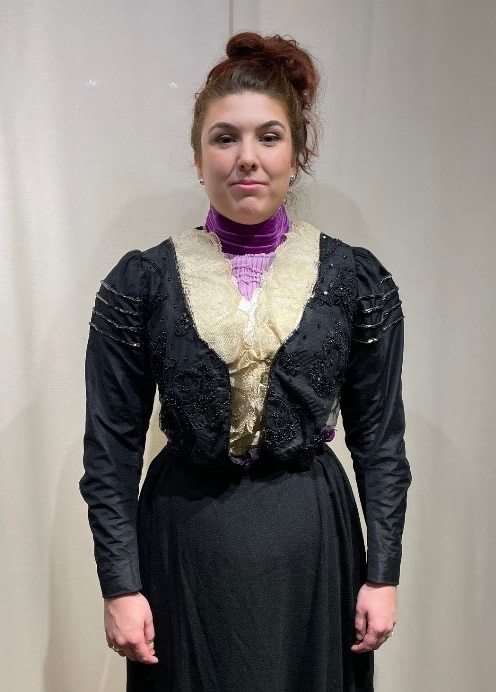
Figure 1: Front |
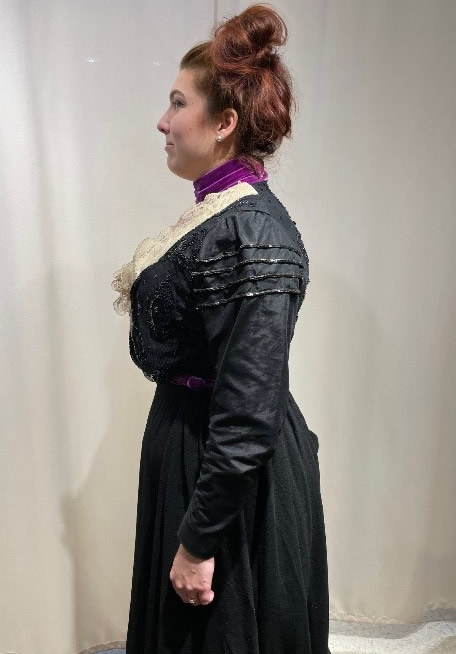
Figure 2: Side |
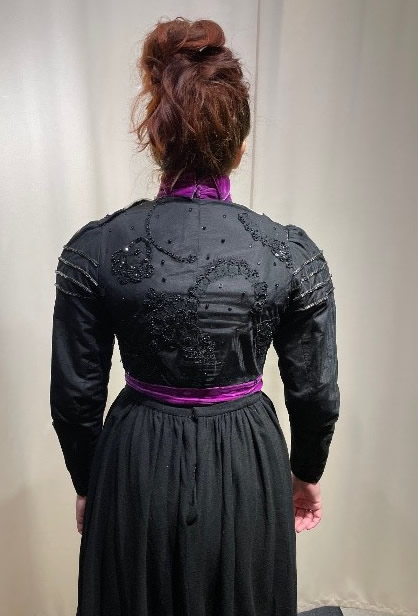
Figure 3: Back |
 |
 |
 |
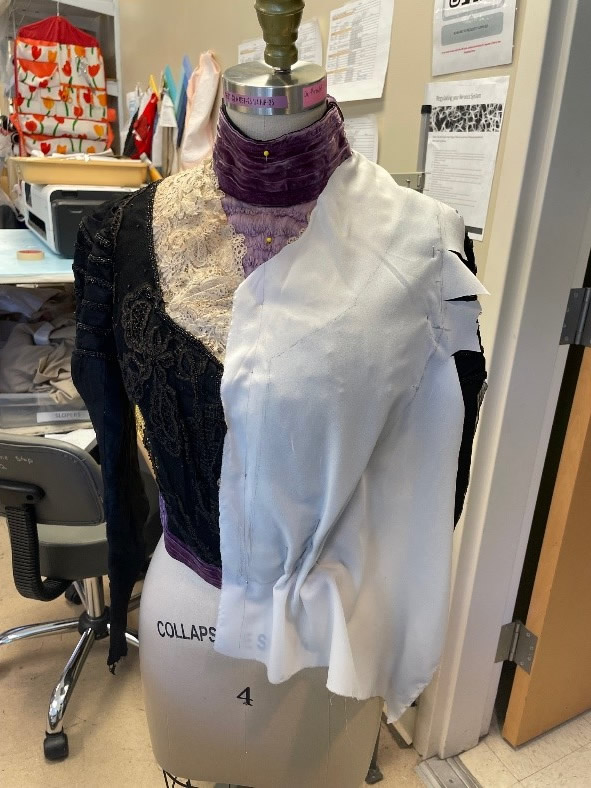
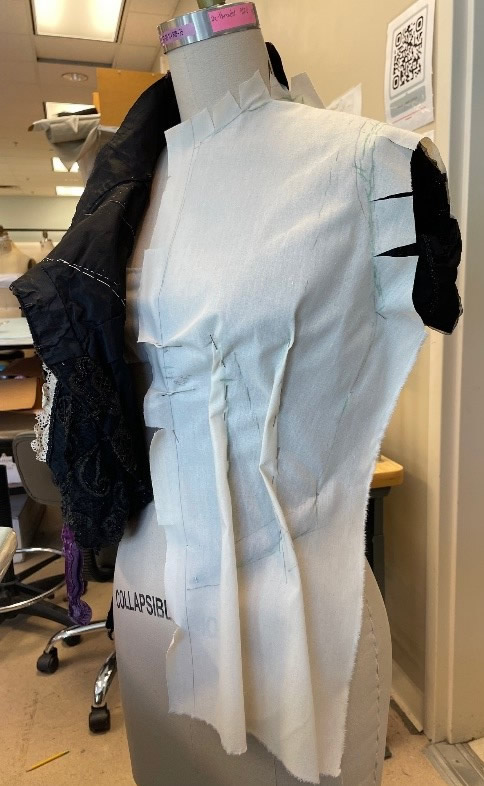
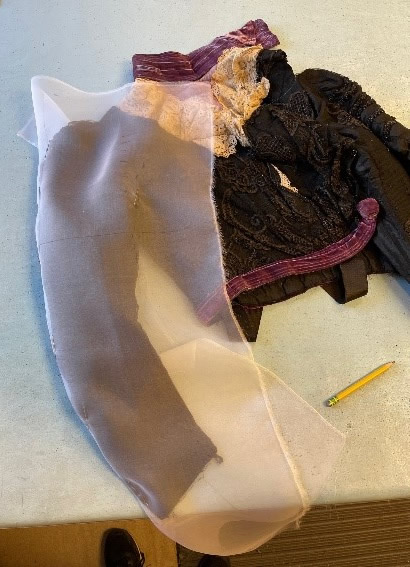
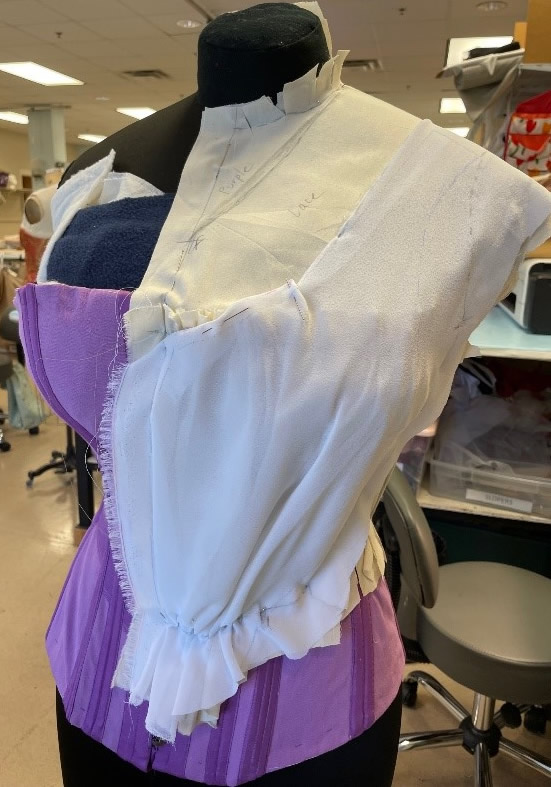
The pattern for the bodice was copied using a few methods. First I put the bodice on a dress form. I draped fabric on top of it to copy the foundation front, false vest, and back beaded overlay, as can be seen in Figures 4 and 5 below. Then I laid the bodice on a table and copied the rest of the pattern pieces by laying a piece of fabric on top and tracing (see Figure 6). To create a new pattern for a model, I draped on top of the corset (see Figure 7). The sleeve and collar patterns were expanded from the original.
Figure 4: Draping
|
Figure 5: Draping
|
 |
 |
The decisions made for the reproduction of this garment are based on a balance of historic study and theatrical use. I used silk taffeta and silk velvet, but the mesh layer is synthetic. For example, instead of a closure of hooks and eyes in the center front interior, I used a size 5 separating zipper. Zippers are faster to use and this layer is never seen on the outside since it is covered by the plastron. I used 1/4" flat steel bones not only because real feather bones are not sold in stores, but steel bones are much stronger. I did not include the layer of chiffon between the taffeta base and beaded mesh as it would not be seen from an audience, nor does it provide significant structural support. Instead of stitching thread bars for the plastron’s overlap I used metal bars. Additionally, I used one skirt hook and bar at the back of the collar instead of three small hooks and bars. The inner waist tape was omitted from reproduction.
Figure 6: Draping the Sleeve |
 |
The materials used in reproducing this garment have been chosen as faithfully as possible to the original design, however some materials were not available. The beaded mesh is very unique. In order to achieve the look of it, I created appliques from beaded lace and laid them out on each pattern piece, then stitched them to a stretch mesh base. The original beaded mesh contains seed beads and flocking, while the lace I used contains slightly larger round beads and faceted sequins. For the black beaded trim I used ¼” bugle bead trim instead of 3/8” seed bead trim. The color of the original velvet faded as mentioned above, so its intended color had to be surmised by the color on the inside of the pleats. I then dyed silk velvet in attempt to be faithful to its intended color. Additionally, the crisp velvet used in the original was not available so the reproduction is much softer. Antique handmade lace for the center front was not readily available, so I used a different textured vintage lace.
Beaded applique was not used on the sleeves of the reproduction. It is no longer present on the original, so there is no design to copy from. Instead, I flatlined plain black mesh on top of the taffeta. The wrist decoration was also omitted from reproduction as it does not feature prominently on the original anymore. Side front padding was used in this garment to create a desired silhouette; however, my model did not require this augmentation, so the padding was omitted.
Figure 7: Draping False Vest
|
 |
© Matty Blatt, 2024