
Reproduction
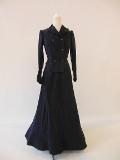
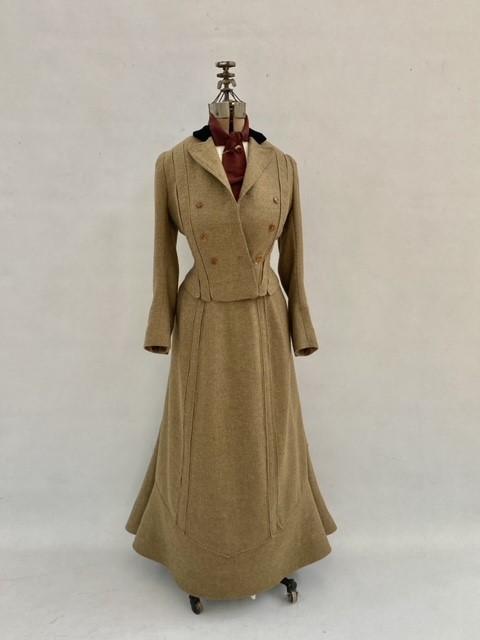
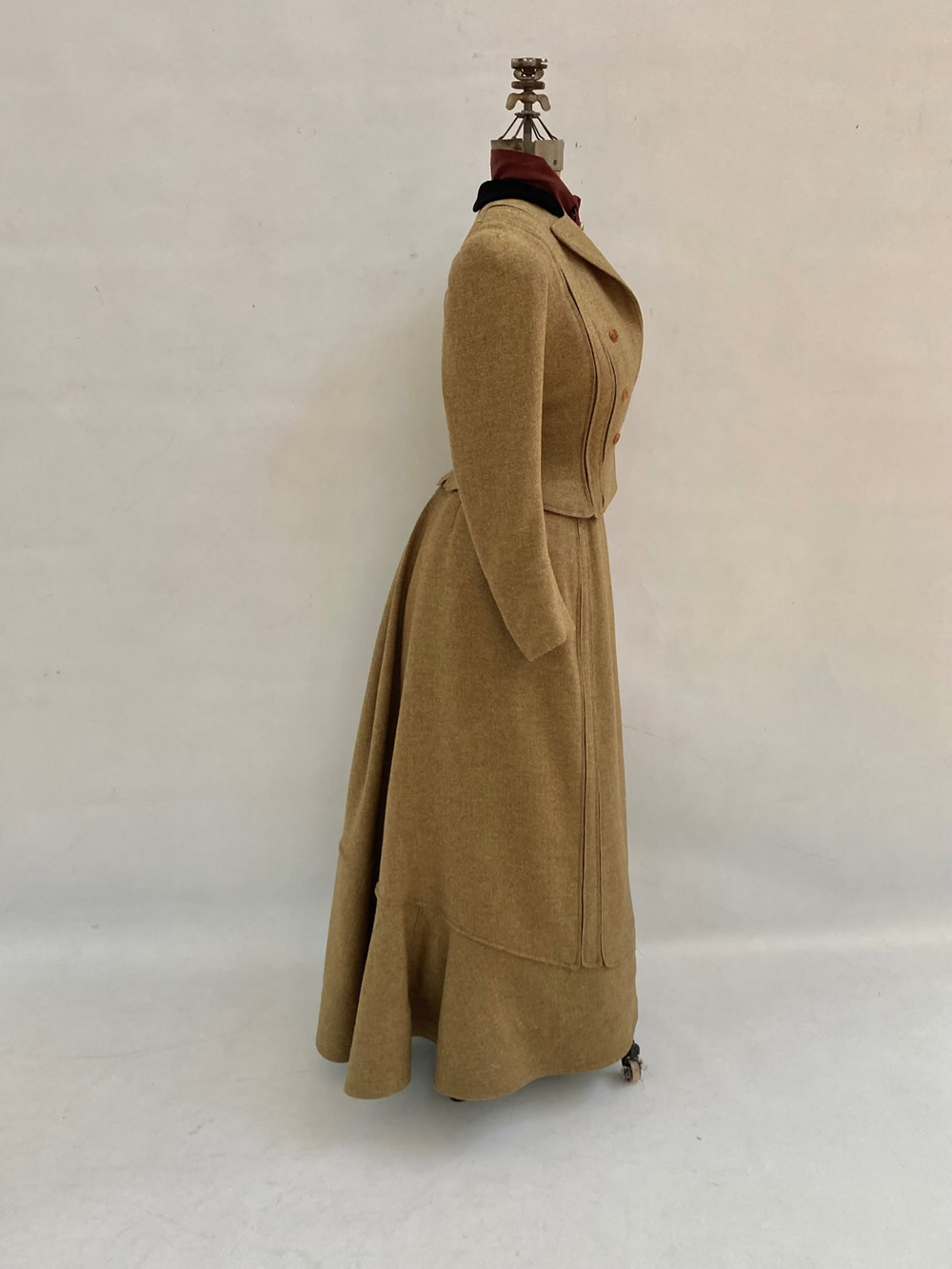
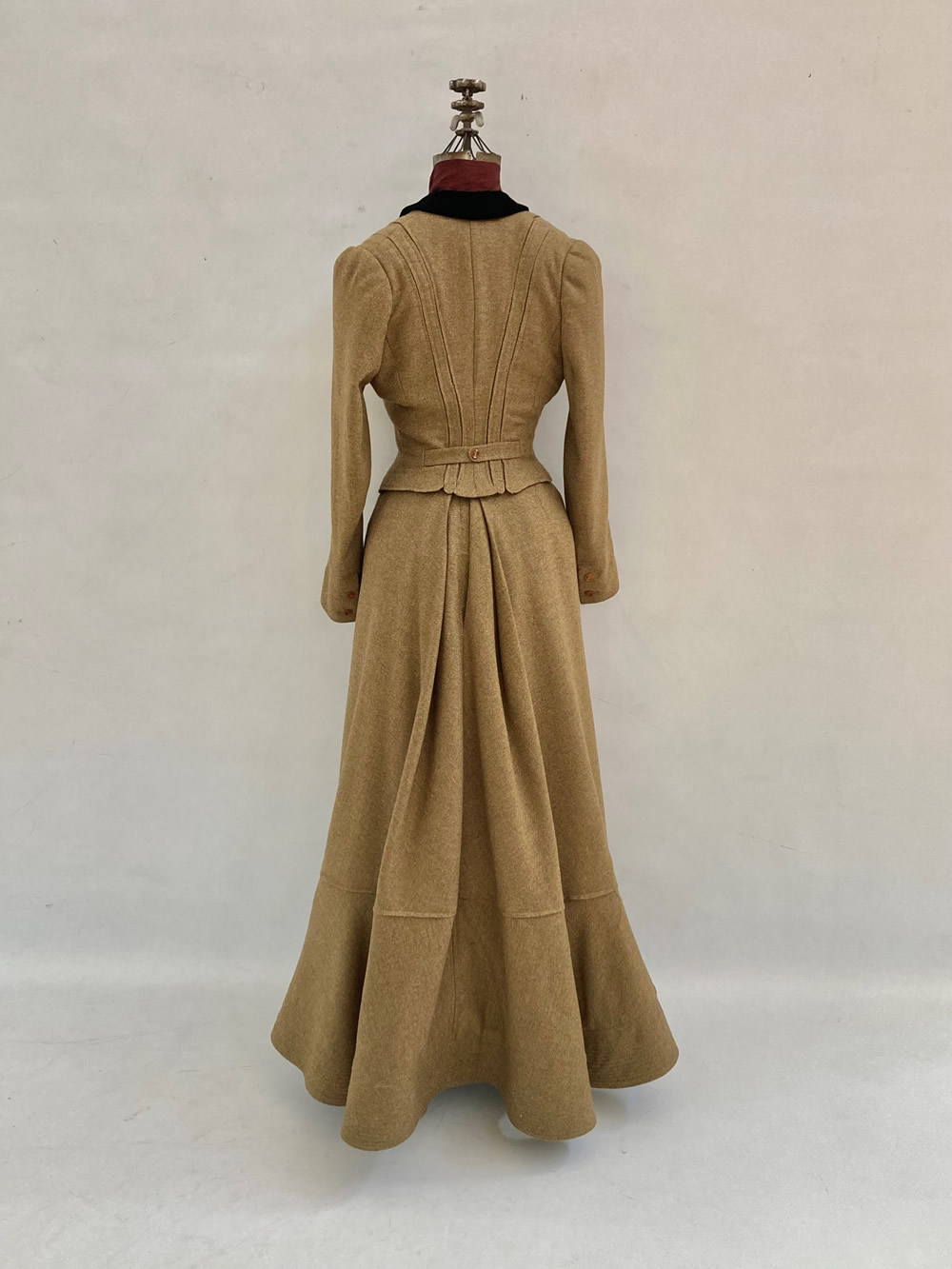
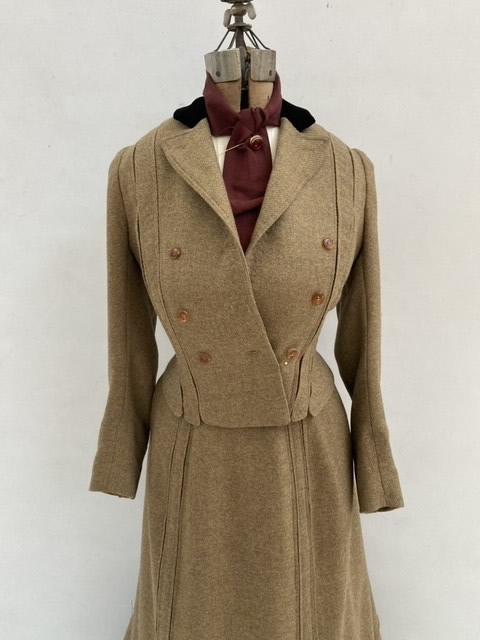
When selecting a garment to reproduce, I was initially drawn to this suit because it demonstrates a complexity of construction and mastery in design that I found interesting. The supremely functional nature of the garment is a product of women's increasing freedom to pursue professional activities and engage in robust sports. I was intrigued by the clever use of slot seams and enthralled by the delightful swish imparted on the skirt by the quilted hem. In a word, I found this walking suit delightful.
Figure 1: Front |
Figure 2: Side |
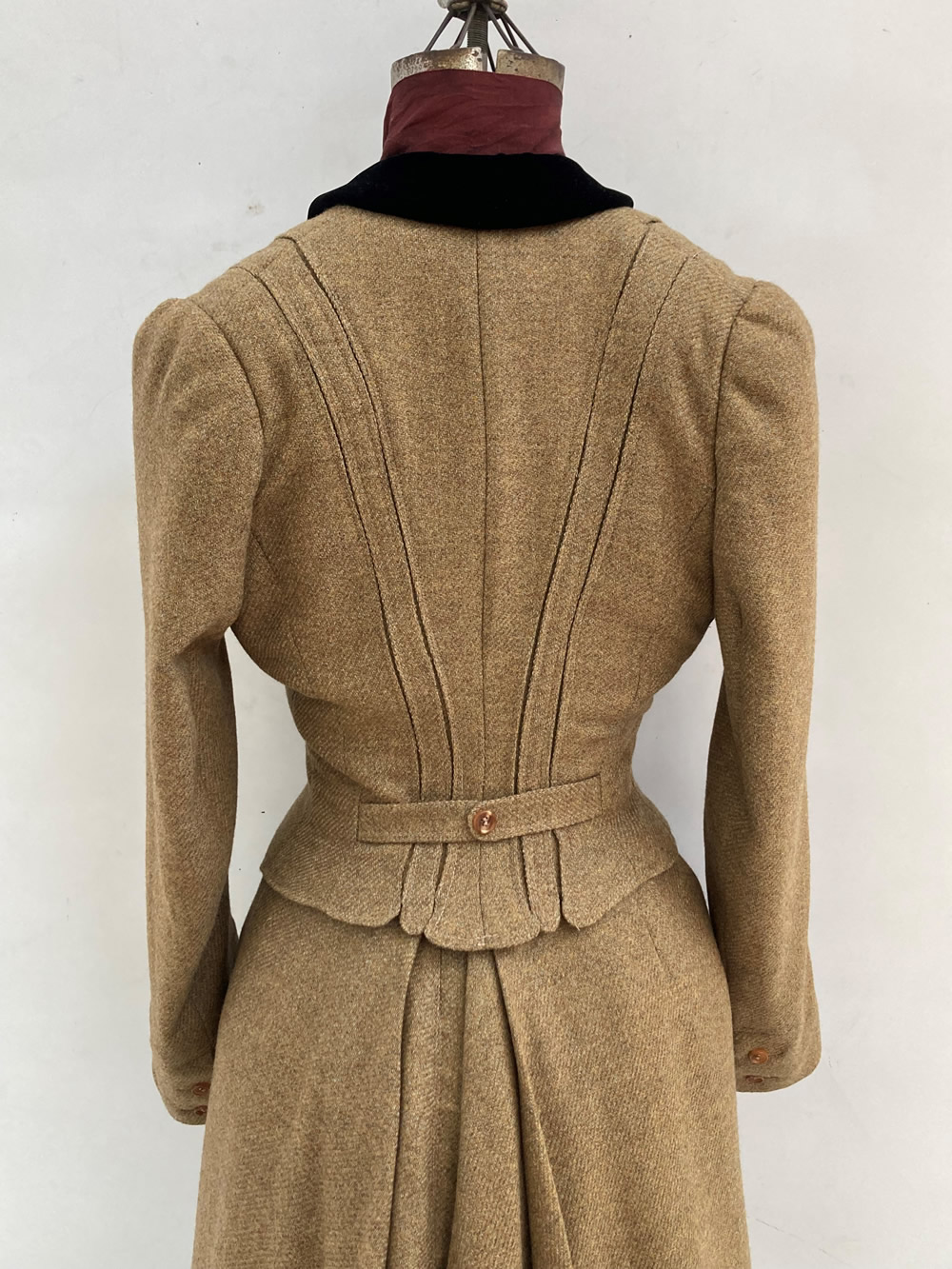
Figure 3: Back |
 |
 |
 |
My process began by sourcing the main fashion fabric. In the original, the wool was a dense, medium-weight wool with a distinctive twill weave. I struggled to find navy-blue wool with these qualities, but I found several period fashion plates of similar suits in brown so I expanded my fabric search to include brown wool and bought eight yards of 55-inch-wide brown twill wool. While I could have lined the suit in habotai silk like the original, the entirely shattered state of the original convinced me to use a more durable option: a polyester blend Bemberg. The collar velvet is black as in the original. While this is a much higher contrast combination than the original navy suit and black collar, my period research showed that a black collar on a brown suit was not uncommon. The material I used to structure the suit front is an Italian-made French canvas very similar in weight and weave to the original, although slightly stiffer. I considered this a good option as the canvas in the original has likely softened over time. The buttons are made from horn, like the original, however they have four holes instead of two.
Figure 4: Bodice Front Detail |
Figure 5: Bodice Back Detail |
 |
 |
I began the patterning process by using silk organza and pins to lift the original pattern from the suit. The original suit was likely worn by someone between 62 and 64 inches tall, with a 23 inch waist and a bust between 31 inches and 34 inches. My fit model was very similar in size but still required some customization from the original pattern. I lengthened the skirt by an inch and increased the breadth of the shoulders, arms, and bust. I also lowered the armscye. While high armscyes are important for mobility in period garments, my model was more muscular than the original owner of the dress and required more room.
Examining the original, I noticed an asymmetric effect in the twill weave between left and right. On the right side, the twill chevron was placed at angles which seemed intentional. On the left side, however, I noticed the twill did not chevron nicely. Initially, I did not understand the meaning of this, though it became clear as I worked. When marking my reproduction, I used the wax paper marking technique to trace double. Ordinarily, with this method, I would fold my fabric long ways, creating a continuous fold down the entire length of the yardage. However, my skirt pieces were too large to fit onto my long-ways-folded 55 inch fabric, so I elected to fold my fabric short ways instead to maximize width. By marking with this configuration, I accidentally reproduced the puzzling grain discrepancy that appears in the original. Even the proper grain chevrons were on the same side. I therefore concluded that the original suit was also cut from fabric around 55 inches wide folded short ways. As my pattern was created for the right side of the garment, and I created the same weave pattern as the original, I suspect the original pattern was also created for the right side of the garment.
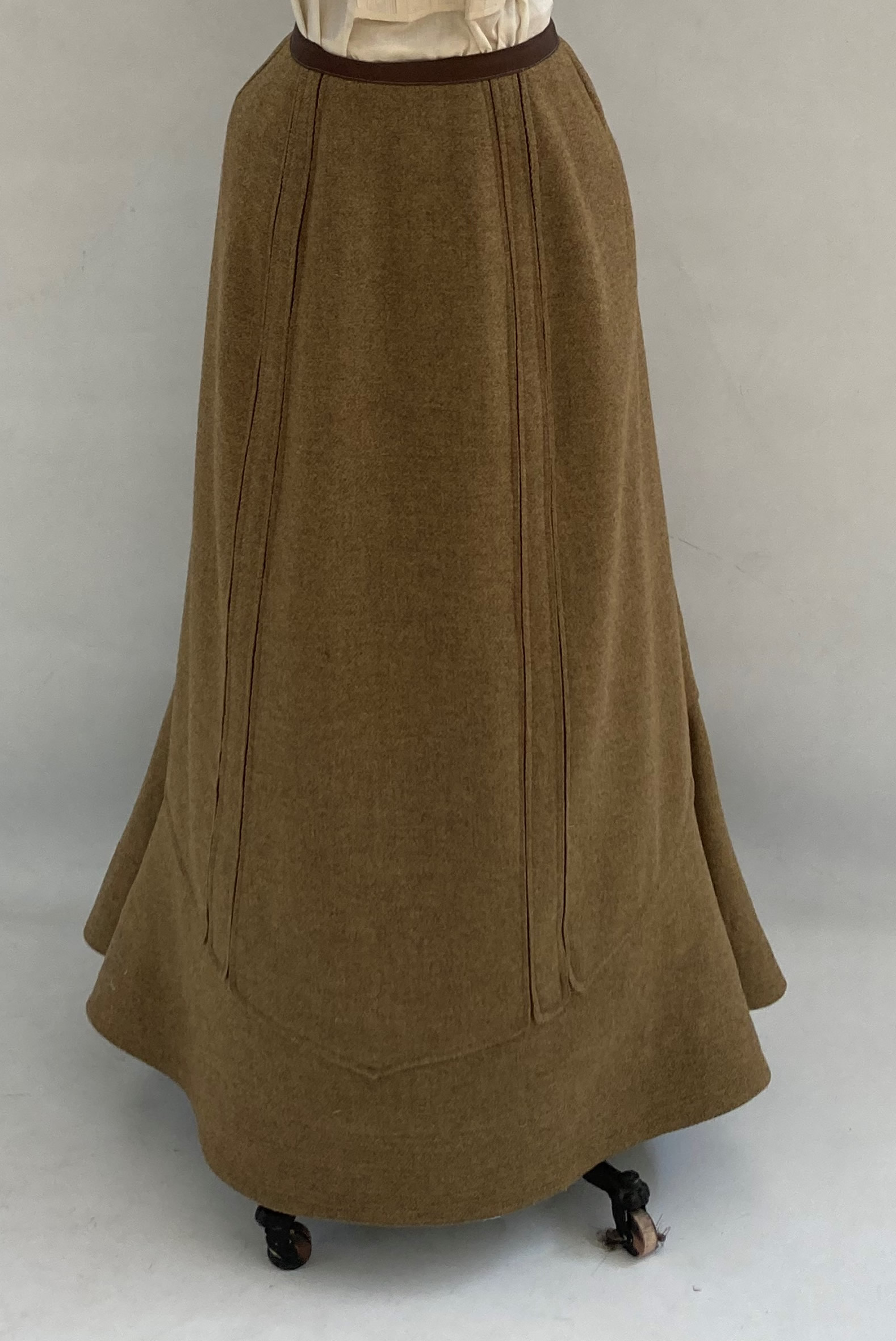
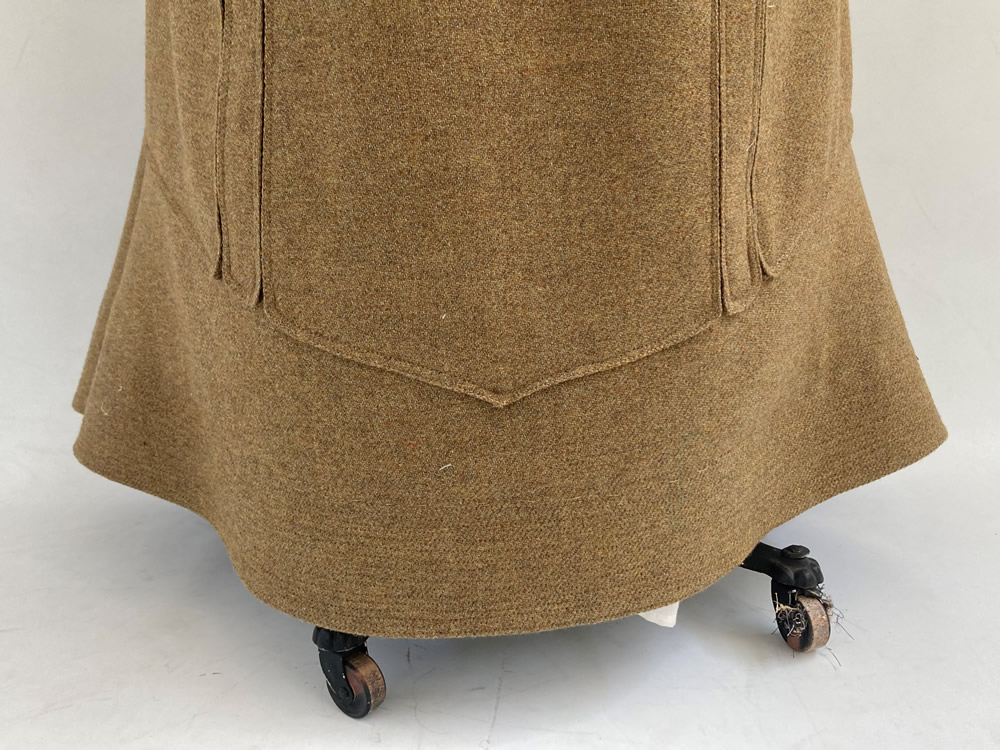
Other than the previously mentioned pattern alterations and change in lining fabric, the reproduction jacket is constructed nearly identically to the original. The reproduction skirt, on the other hand, has several differences. While my reproduction fabric is very similar to the original, it is a little softer and less densely woven. To make up for this, I flat-lined the skirt panels with silk organza dyed brown to match the inside of the skirt. To the hem, I added a bias strip of light hymo the width of the quilted panel. These techniques are often used in a theatrical context to help keep long skirts away from the performer’s feet. Along the same lines, I chose to use bias to bind all the interior skirt seams, unlike the raw seams of the original.
Figure 6: Skirt Front |
 |
The final major deviations between my reproduction and the original were done to improve alterability. First, I changed the placement of the placket. In the original, the placket is slashed into the skirt deep in the return of the center back pleats. Instead, I elected to make a placket into the center back seam. Based on the unusual placement of the skirt seams, I determined the most likely way for the skirt to be altered was to change the depth of the pleat at the center back, so leaving the slash in the return would not guarantee it would remain hidden after alteration. Second, I added additional seam allowance to the top of the skirt hem. With the way the hem on the original is quilted and faced, it would be impossible to change the length of the skirt by letting down the hem. With extra seam allowance at the top of that panel instead of at the bottom, the skirt could be lengthened by raising or lowering the hem flange.
Figure 7: Skirt Flange |
 |
© Athene Wright, 2023