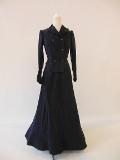

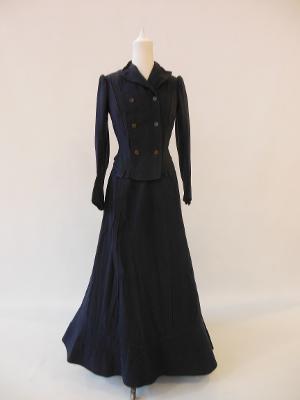
Navy Wool Walking Suit c. 1901-1902
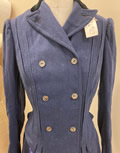
Figure 1: Front |
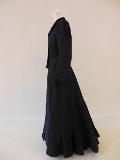
Figure 2: Side |
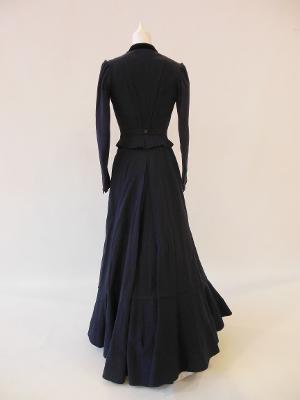
Figure 3: Back |
 |
 |
 |
Dating and Provenance
This walking suit was donated to the Costar Archive during the spring of 2022, without provenance. The dress was initially dated as being from the first decade of the 20th century. With further research, I discovered that the fashion magazine The Deliniator included several images of extremely similar walking suits in multiple editions in 1901 and 1902. Since The Deliniator and the walking suit are both American-made it very likely that this suit can be more closely dated to 1901/1902. When compared to numerous other examples of women’s Norfolk-style jackets from this period, several features in particular help corroborate the date. The suit's sleeves are slim with a slight puff at the shoulder. This is consistent with the deflation of the 1890s gigot sleeve that took place around the turn of the twentieth century. The dipped front waistline and trumpet flare of the skirt are both styles typical of the early Edwardian period. Finally, the narrow top-stitched panels that appear on the bodice and skirt, called slot seams, are also consistent with the fashion of this era. This suit features a moderate version of the fashionable silhouette. This suit's overall style matches with the growing fashion for "tailor-made" clothing for women: womens wear created using the styles and techniques of contemporary menswear.
Description
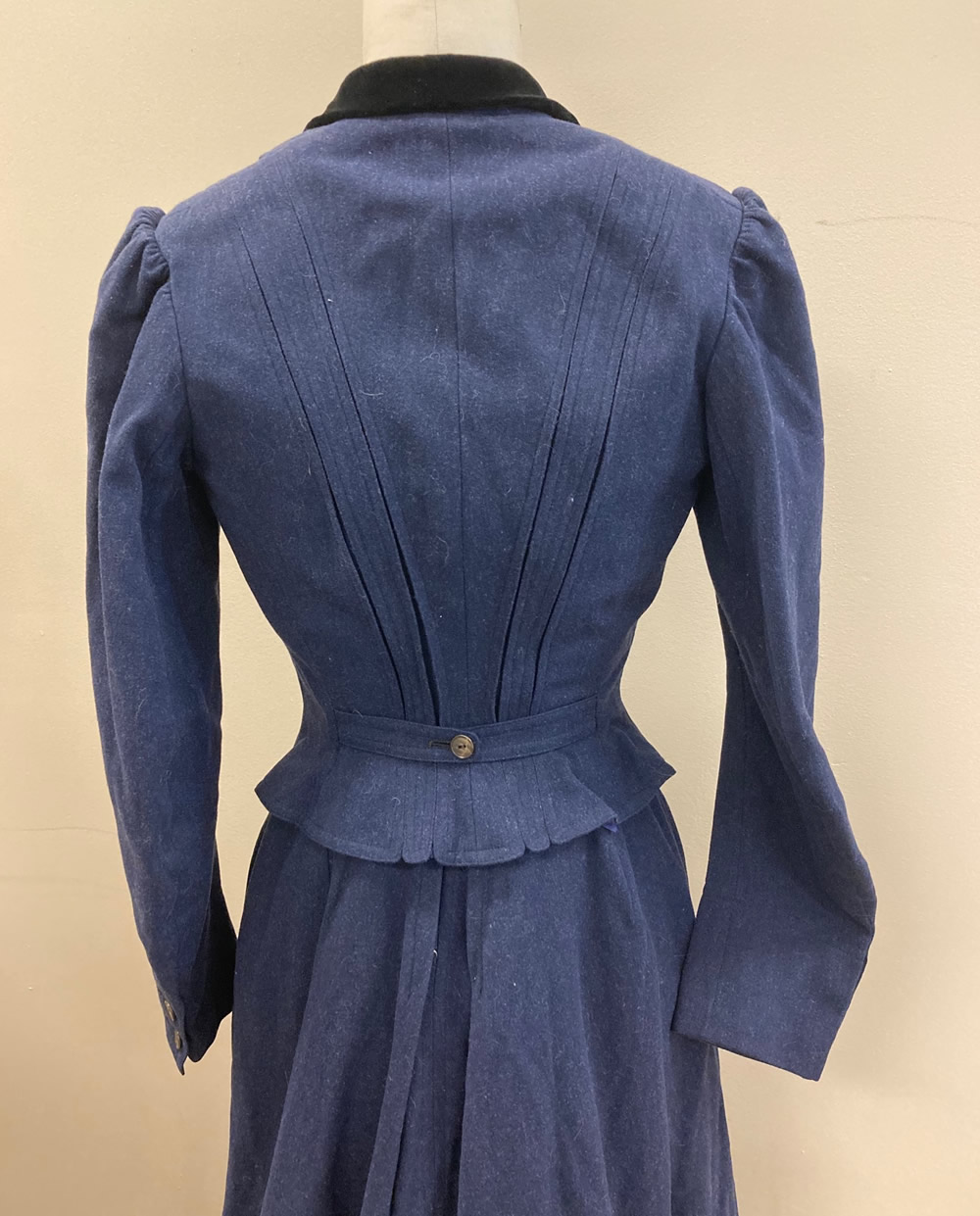
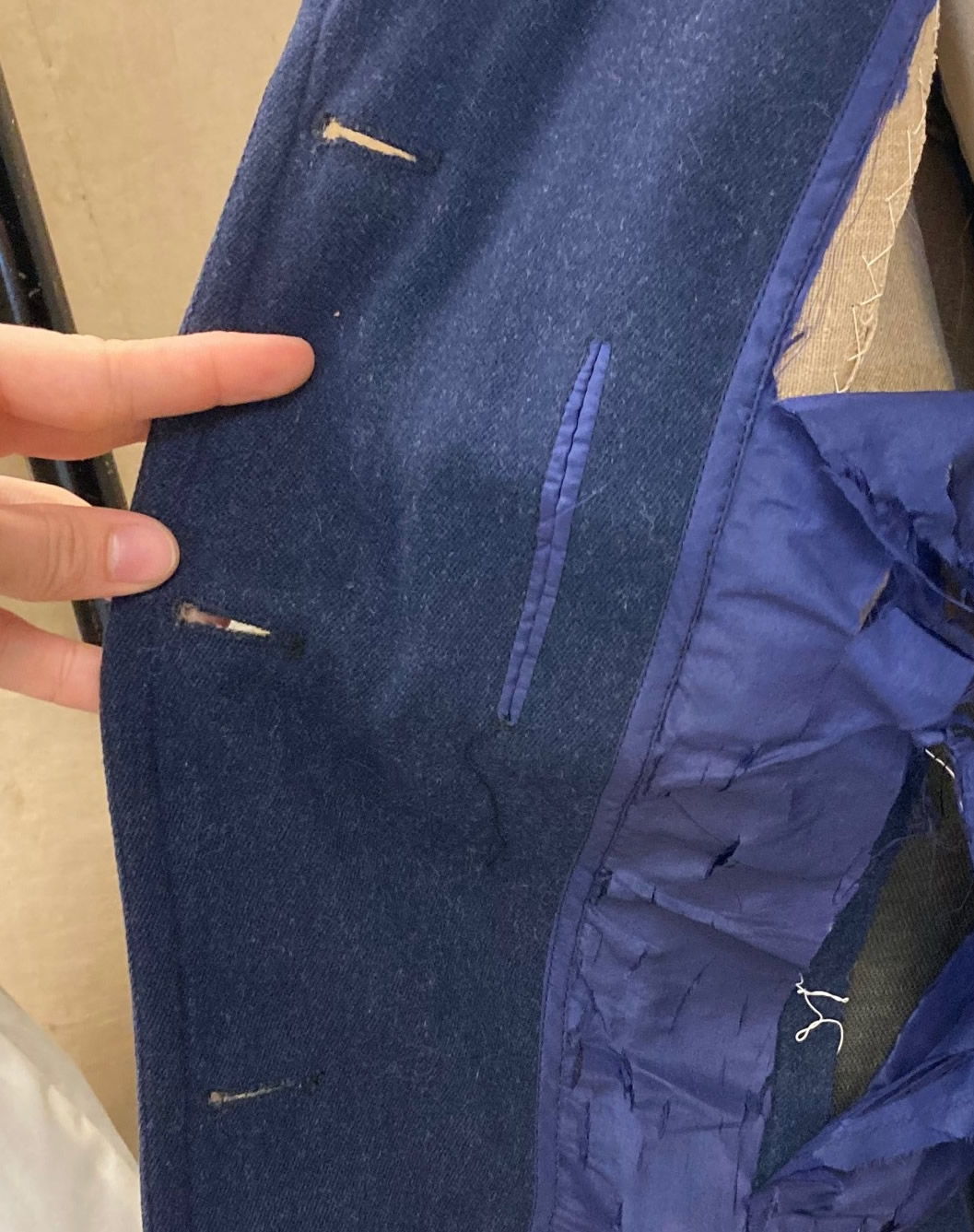
The original suit was likely worn by someone between 62 and 64 inches tall, with a 23 inch waist and a bust between 31 inches and 34 inches, measured over a corset. This garment is labeled James McCreery and Co. It consists of two parts, a double-breasted jacket and a skirt. Both pieces are largely machine sewn and show no indications of having been altered. I believe the suit was worn by one person at most, and only rarely so. The jacket has a peaked lapel top-stitched around the edge with a buttonhole at the peak (see Figure 4 below). The buttonholes on the lapels have not been opened. The under collar is the same wool as the fashion fabric and is interfaced with French canvas. The over collar is silk velvet cross-stitched by hand to the under collar. The facing is slightly narrower than the center front panel and bound in bias on the lining edge. There is a small, vertical double welt pocket set into the facing on the right hand side (see Figure 6 below). This is the ensemble’s only pocket. A narrow belt comes out of each side back seam and buttons at the center back (see Figure 5 below).
Figure 4: Front Detail |
Figure 5: Back Detail |
Figure 6: Front Lapel andInterior Pocket |
 |
 |
 |
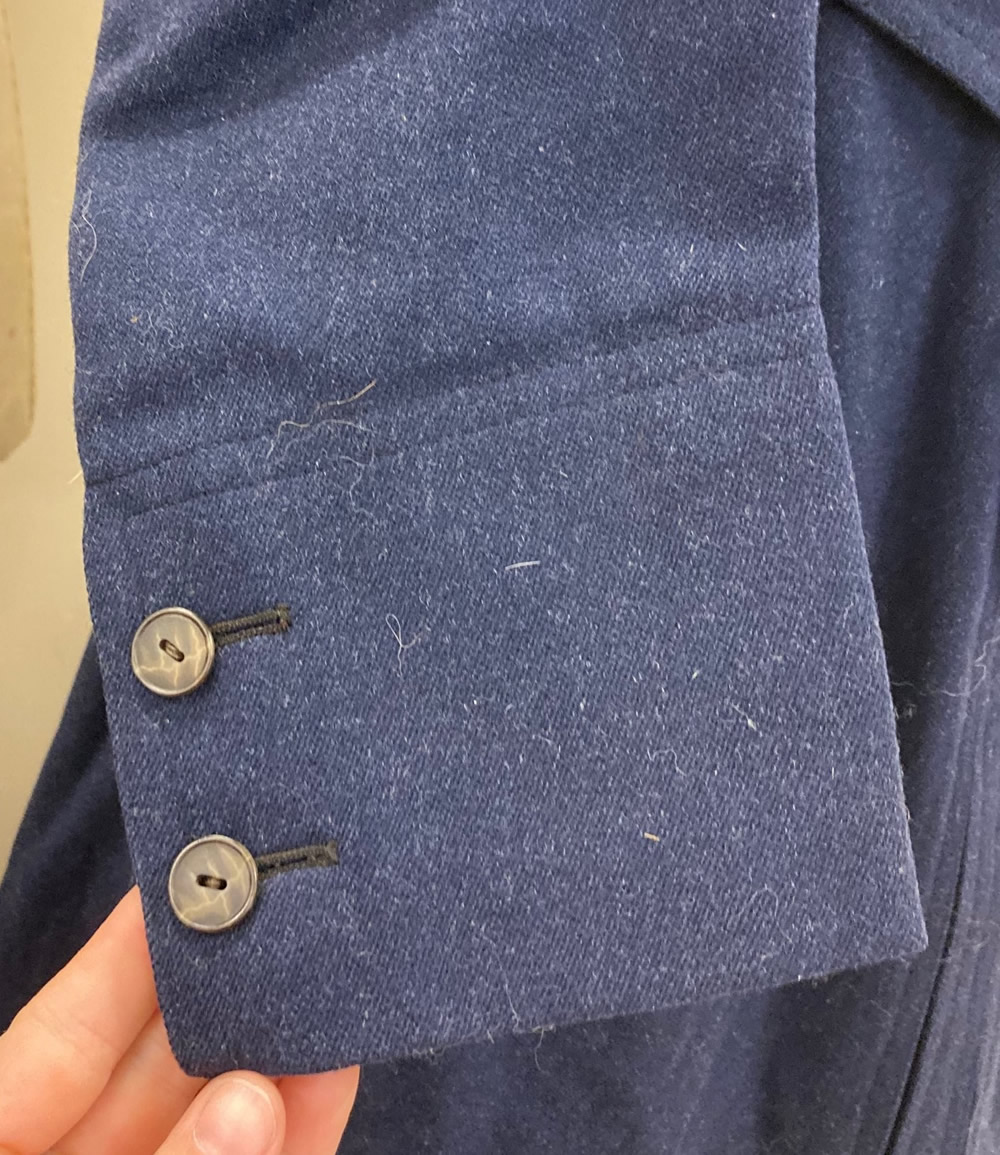
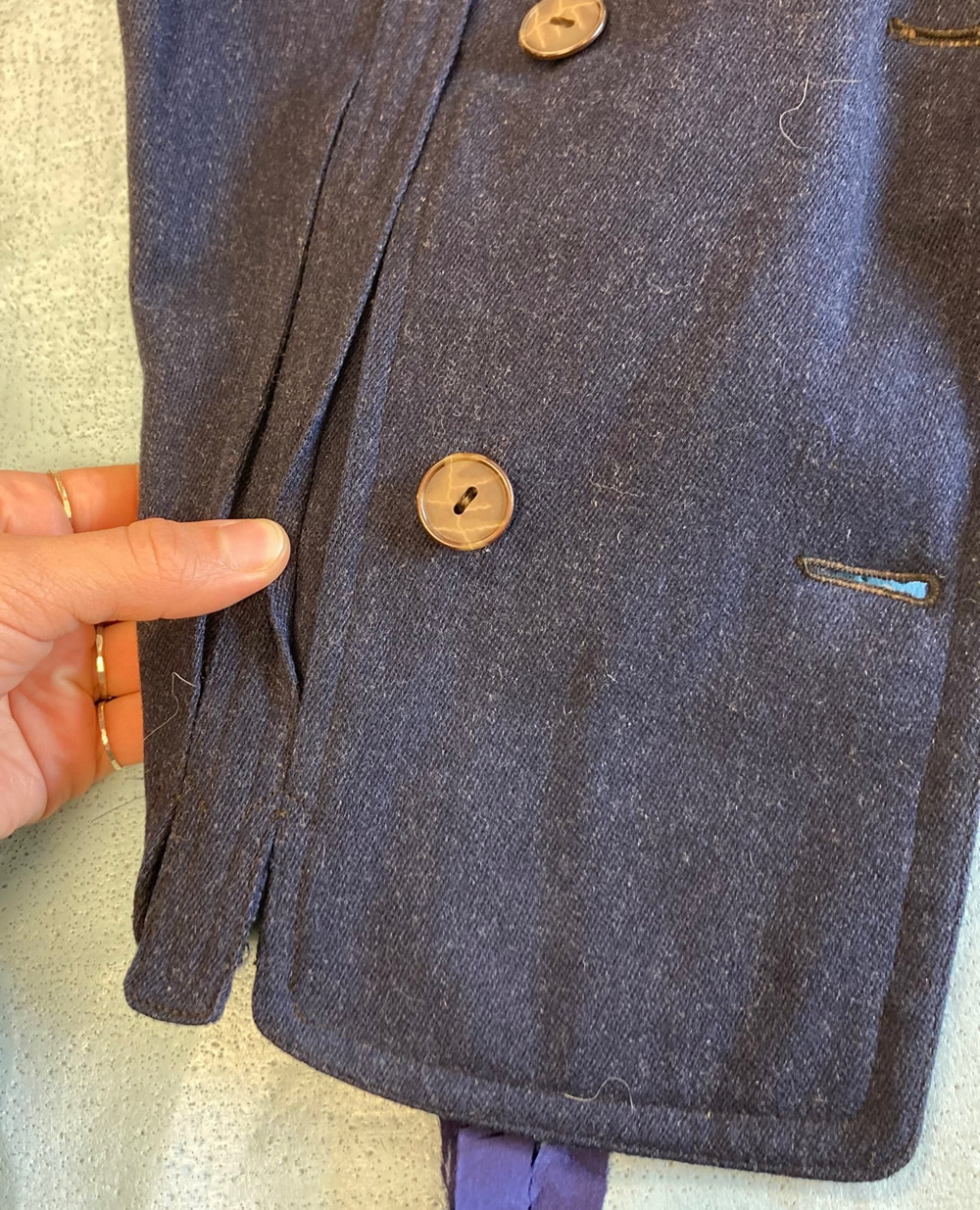
The sleeves are gathered into the armscye. The sleeve hems are stitched with a double topstitch. The fully functional sleeve plackets have two buttons with keyhole buttonholes. The jacket features decorative slot seams front and back (see Figure 8 below).
Figure 7: Cuff |
Figure 8: Slot Seams |
 |
 |
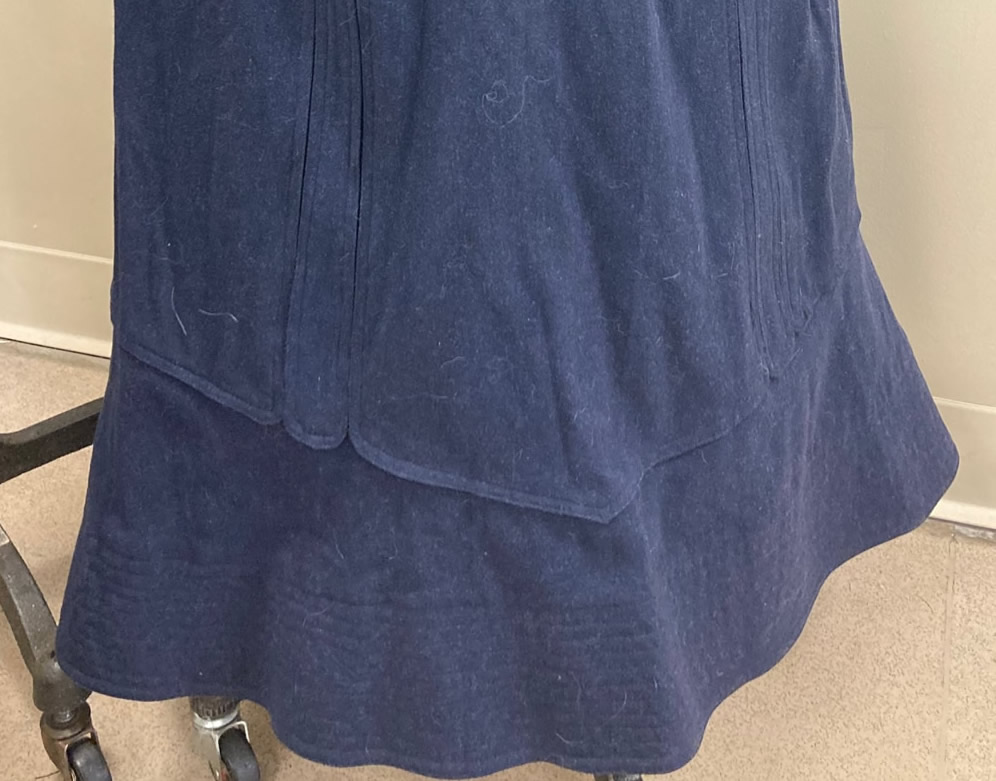
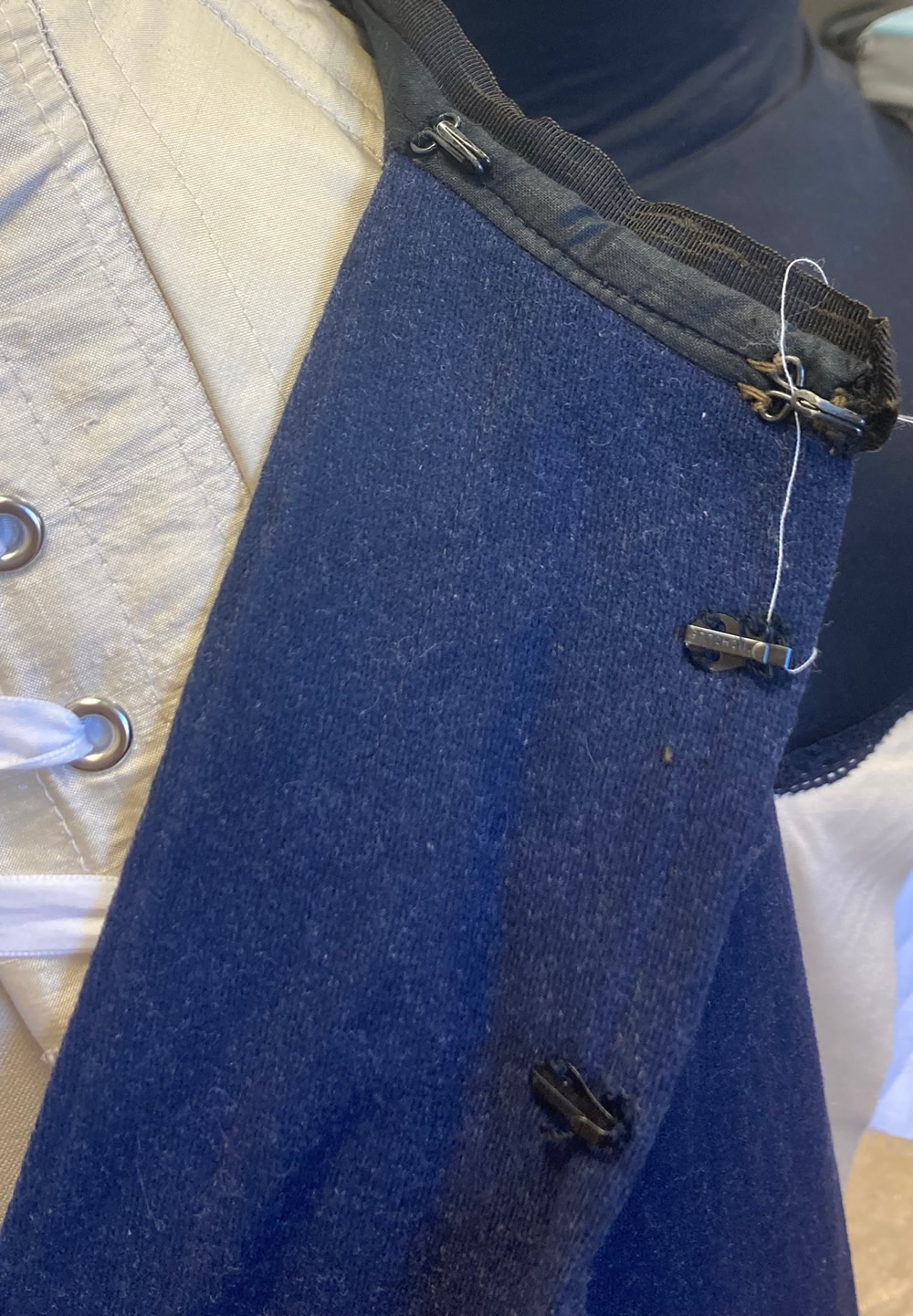
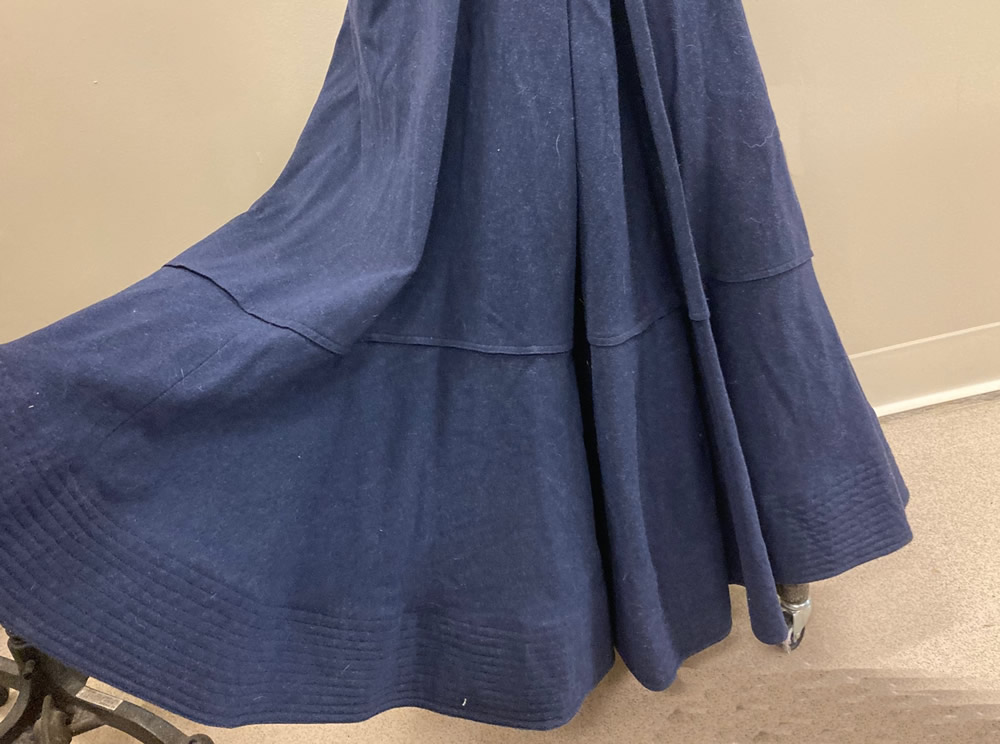
The skirt is flat in the front and has a full box pleat at the back. The hem flange (see Figures 9 and 11 below) is a circular ruffle quilted with a bias facing made from the fashion fabric and pieced in several places. The top edge of the facing is bound in a black polished cotton bias tape (see Figure 10 below). This same bias tape is used to bind the top edge of the skirt. The skirt pleats were stitched before the top edge was bound with the result that there are no seam breaks. These two bound edges are the only finished seam allowances on the skirt. There is some evidence of selvedge in the skirt seam allowances, however the bound edge of the selvedge has been cut off. The skirt closure is under the center back pleats (see Figure 10 below). There is no placket; a slit was cut in the skirt and the edges were bagged out with a facing made from the fashion fabric and machine top-stitched back. This slit was cut three inches to the right of center back.
Figure 9: Skirt Hem Front |
Figure 10: Skirt Closure |
Figure 11: Skirt Hem Back |
 |
 |
 |
Fabrics and Materials
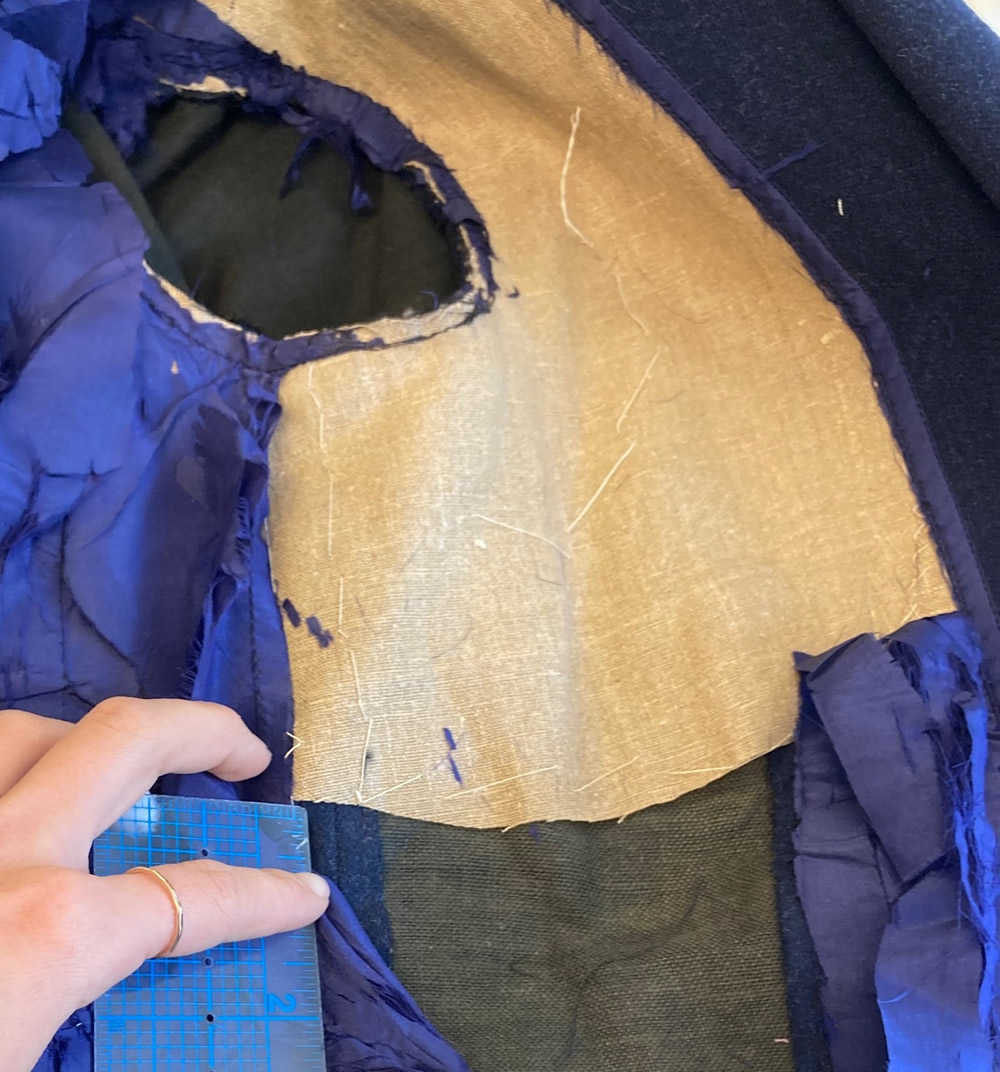
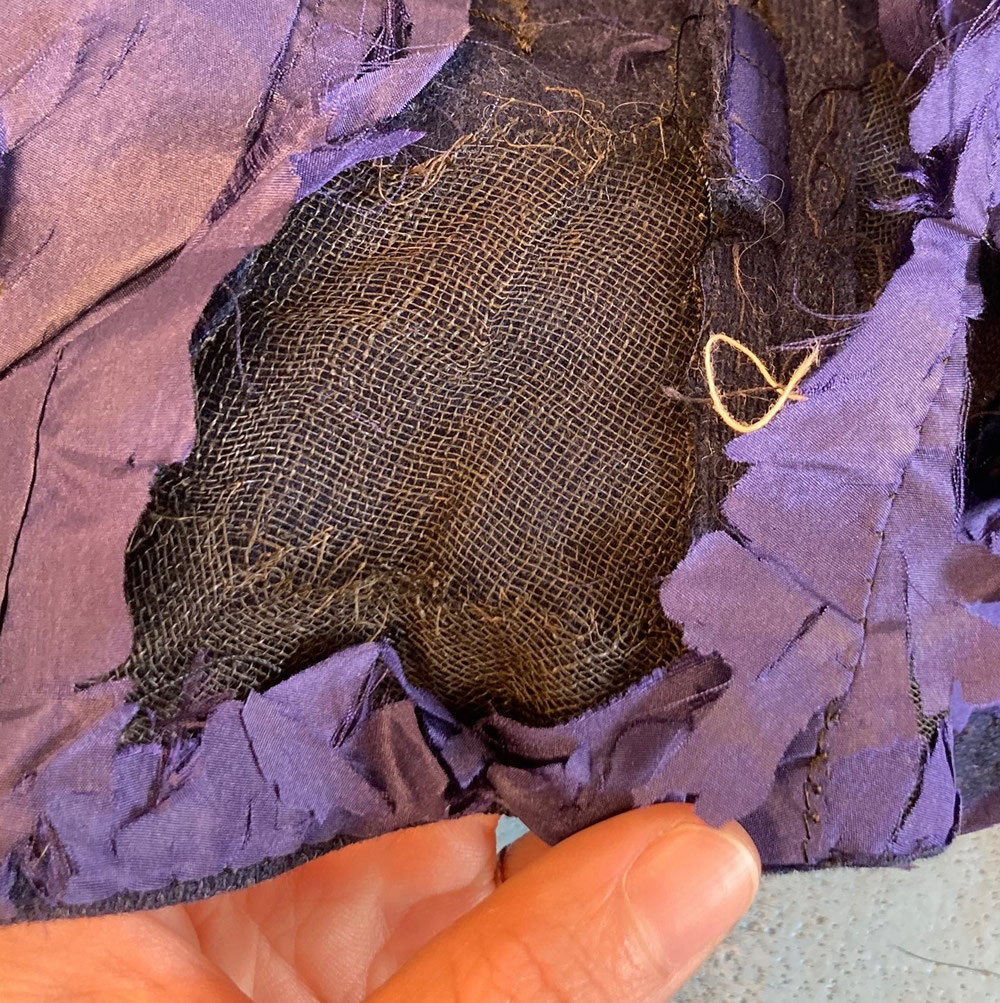
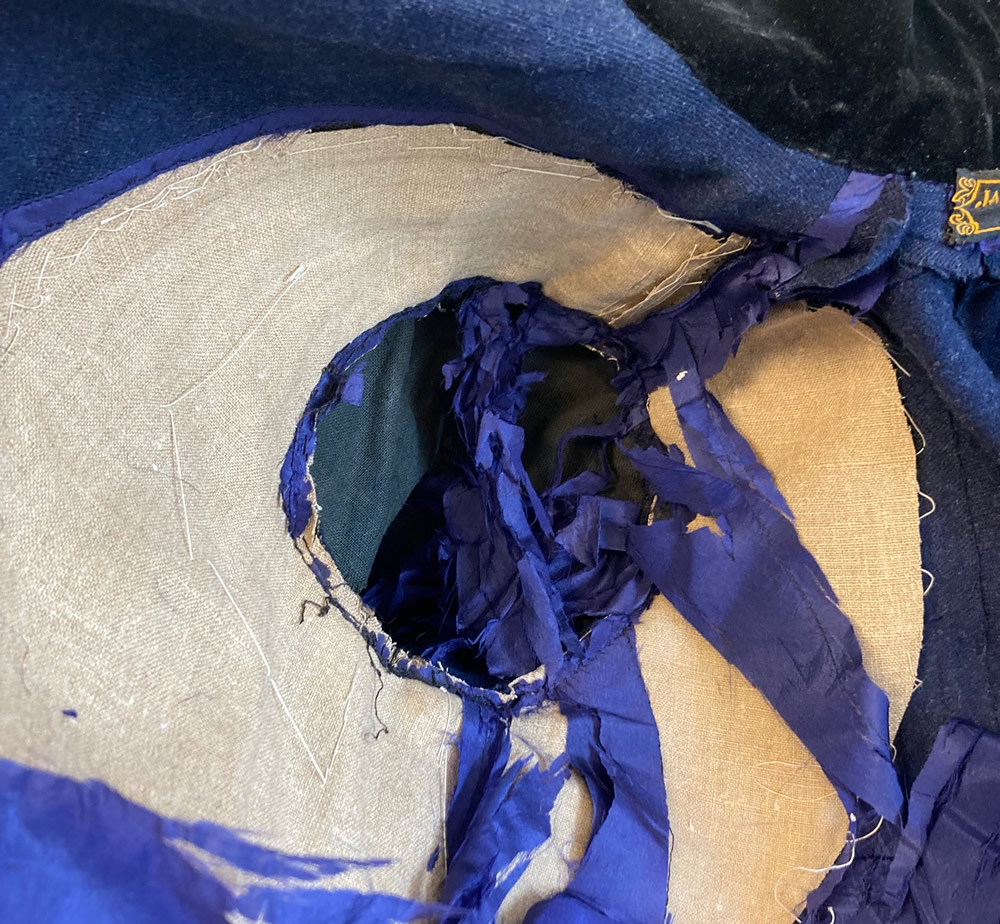
The primary fabric used in this suit is a tightly woven navy-blue wool twill. The fabric is densely woven, moderately rough, slightly stiff, and shows little to no damage. The jacket lining is a slightly brighter blue silk habotai, which is completely shattered, but not in a way that suggests damage from sweat. The upper collar, made from low-pile black silk velvet is in pristine condition. The pile is not crushed and exhibits no evidence of wear. The jacket front and side front are flat-lined with a loosely woven dark grey cotton fabric. The jacket is supported by a tailored structure made from a finely woven French canvas symmetrically pieced at the roll line and the side seam. The individual pieces of French canvas are joined edge to edge by hand cross stitches. The French canvas goes all the way around the armscye (see Figure 12 below). There is bias woven wiggan in the hem (see Figure 13 below).
Figure 12: French Canvas |
Figure 13: Wiggan |
Figure 14: Armscye |
 |
 |
 |
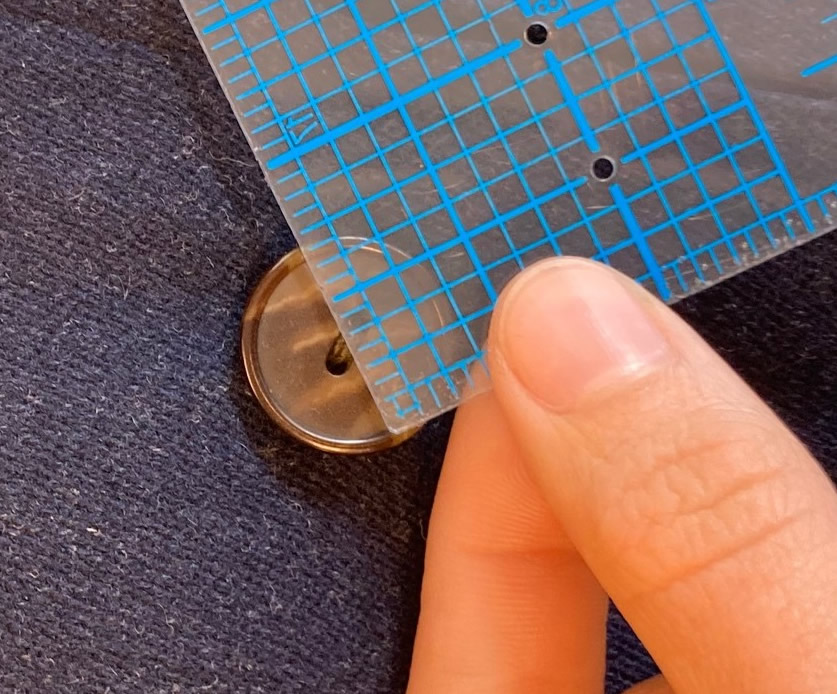
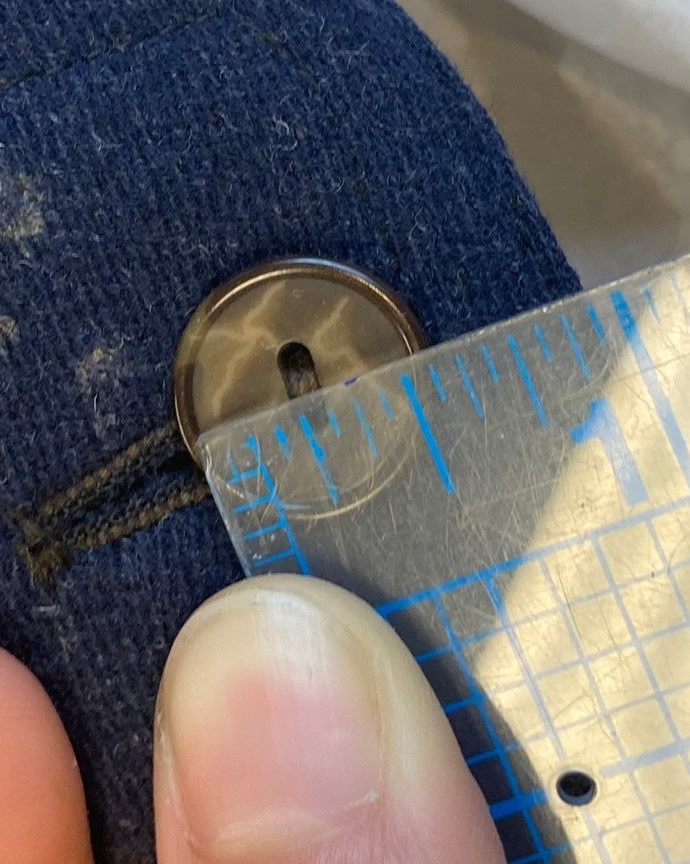
The jacket’s front buttons are 3/4 of an inch in diameter and made from dyed horn. They are matte with a slightly shiny lip around the outside edge. The sleeve buttons and the button on the center back tab appear the same as those on the center front, but are 1/2 inch in diameter. All of the buttons, even the non-functioning ones, have two holes and are attached with a shank. All of the buttonholes are machine bound.
Figure 14: Jacket Button |
Figure 15: Sleeve Button |
 |
 |
The skirt is made of the same navy wool as the jacket. It has a single-layer, cotton grosgrain waistband with a bound edge. The hem flange and top edge are bound in polished cotton. The center back has a hook and bar at the waist and a series of Nichols brand spring hooks and loops. The waistband shows the most wear of any part of the garment.
Construction and Context
This suit is primarily machine stitched, though the buttons and closures are hand-stitched. The twill pattern chevrons nicely on the right side and seems off grain on the left, leading me to believe that the original jacket pattern was made to represent the right side of the body. The suit was likely cut on the fold.
The suit shows no evidence of alteration or restyling. The garment had not been dyed to alter the original color. All of the findings appear to be original. There are no missing buttons nor evidence any trim has been removed. Usually, a suit of this type was constructed to be a practical, hard-wearing garment, however there is little to no evidence of wear on any part of this suit.
Damage
The lining is shattered, obscuring the most common places for damage to show. However, there is no sun fading or any other significant signs of wear. It is entirely possible that the silk lining shattered from age rather than wear (see Figures 6, 12, 13, and 14 above). There is no damage in the places where sweat is most likely to accumulate. The wool parts of the garment are in excellent condition. There is no distinct wear on the cuffs, elbows, or hem. The waistband shows signs on considerable wear. All the damage is most easily attributed to age. There are no fold lines and no moth damage suggesting that the garment was carefully stored.
Label
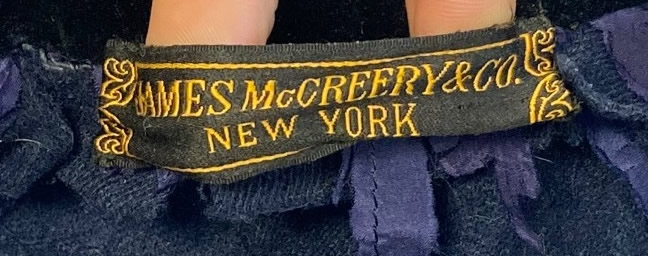
There is a woven label at the center back of the jacket just below the collar that identifies the manufacturer as James McCreery and Co, New York (see Figure 16 below). There are no other labels to indicate size, personal ownership, or laundry tags.
Figure 16: Label |
 |
Cultural Context
This walking suit was produced at a very interesting moment in women's history. During the early Victorian era, women were widely held to a strict set of ideas which outlined the appropriate way for them to behave. This concept, often called the cult of domesticity, was the idea that society was divided into two distinct spheres of activity: home and the outside world. They held that it was in the very nature of women to exist solely in the domestic sphere. This cultural expectation began to shift during the late Victorian era and continued into the Edwardian era. Amplified by women's participation in higher education, clerical careers, and social work, this trend took shape in the form of the women's suffrage movement and women's clubs.
As women increasingly moved out of the domestic sphere, styles of dressing adapted. As women claimed more professional agency, they also began to play more sports, which caused a demand for women's clothing with more freedom of movement and durability. During the 1890s, the focal point of women's dress shifted away from the skirt and settled on the bodice. Bustled styles disappeared and skirts became simpler, while bodices and shirts began displaying large gigot sleeves. Women adapted and adopted elements of menswear, including shirtwaists, coordinating suit jackets, vests, notched collars, and neckties.
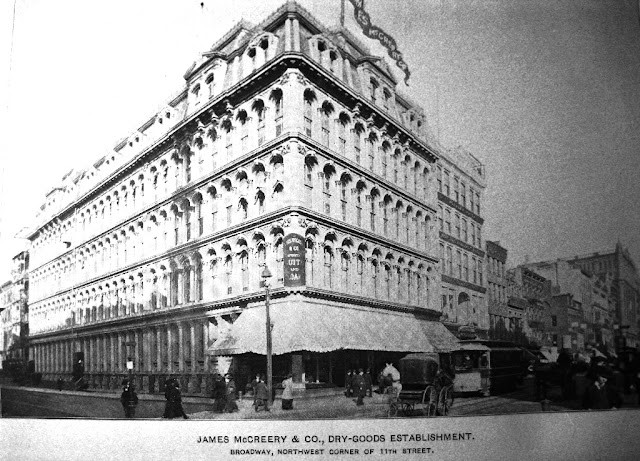
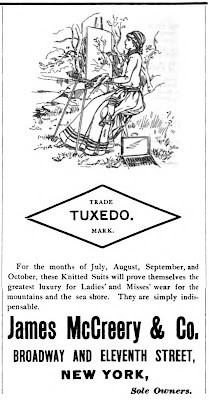
This was the world in which James McCreery and Co. emerged as a major name in women's tailor-made garments and sportswear. Began in 1869, James McCreery and Co Dry Goods opened for business on Broadway and 11th street in New York City. Initially, they were known for their luxury imported silks. In 1895, a second location opened on 6th avenue, which had become a big shopping district. It was around this time that McCreery and Co produced one of its most popular and famous items of womens wear. The Tuxedo and Lennox suits revolutionized women’s sportswear (35,36). Contrary to the name, the Tuxedo suit was actually an unstructured, knitted suit designed for physical activity.
Figure 17: Walking Suit,
|
Figure 18: The Deliniator,December 1902 |
|
I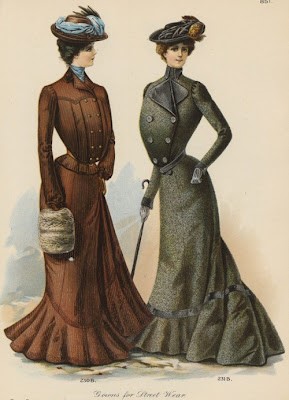 |
Though not marked with any particular style label, the navy walking suit is clearly derived from this legacy of women’s outdoor wear. Similar suits, such as The Lennox and Tuxedo suits sold for $18 in 1890, equivalent to approximately $600 in 2023. This places clothing produced by James McCreery and Co during this period at the high end of garments. From this information, I estimate a similar, if not slightly higher, price for the walking suit. As James McCreery and Co produced high-end goods, their advertisements rarely included prices during this period.
Figure 19: James McCreery and Co.801 Broadway, c.1895
|
Figure 20: McCreery Ad, c. 1887 |
 |
 |
© Athene Wright, 2023