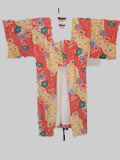

The kosode pictured below in Figure 1, is made for a woman around five feet tall who was probably in early adolescence. It is made from silk crepe and would be worn in a casual setting, such as taking a stroll around the park or for a social gathering of friends and family. It has a repeating pattern that falls in diagonal stripes that was created using Yuzen style of dyeing. This dyeing method, invented by the artist Miyazaki Yuzen during the late seventeenth century, allows a textile artist to create greater detail than seen before that time. It has a white "collar" sewn around the neckline, called a date eri.
Figure 1: Peach Kosode with Playful Petals |
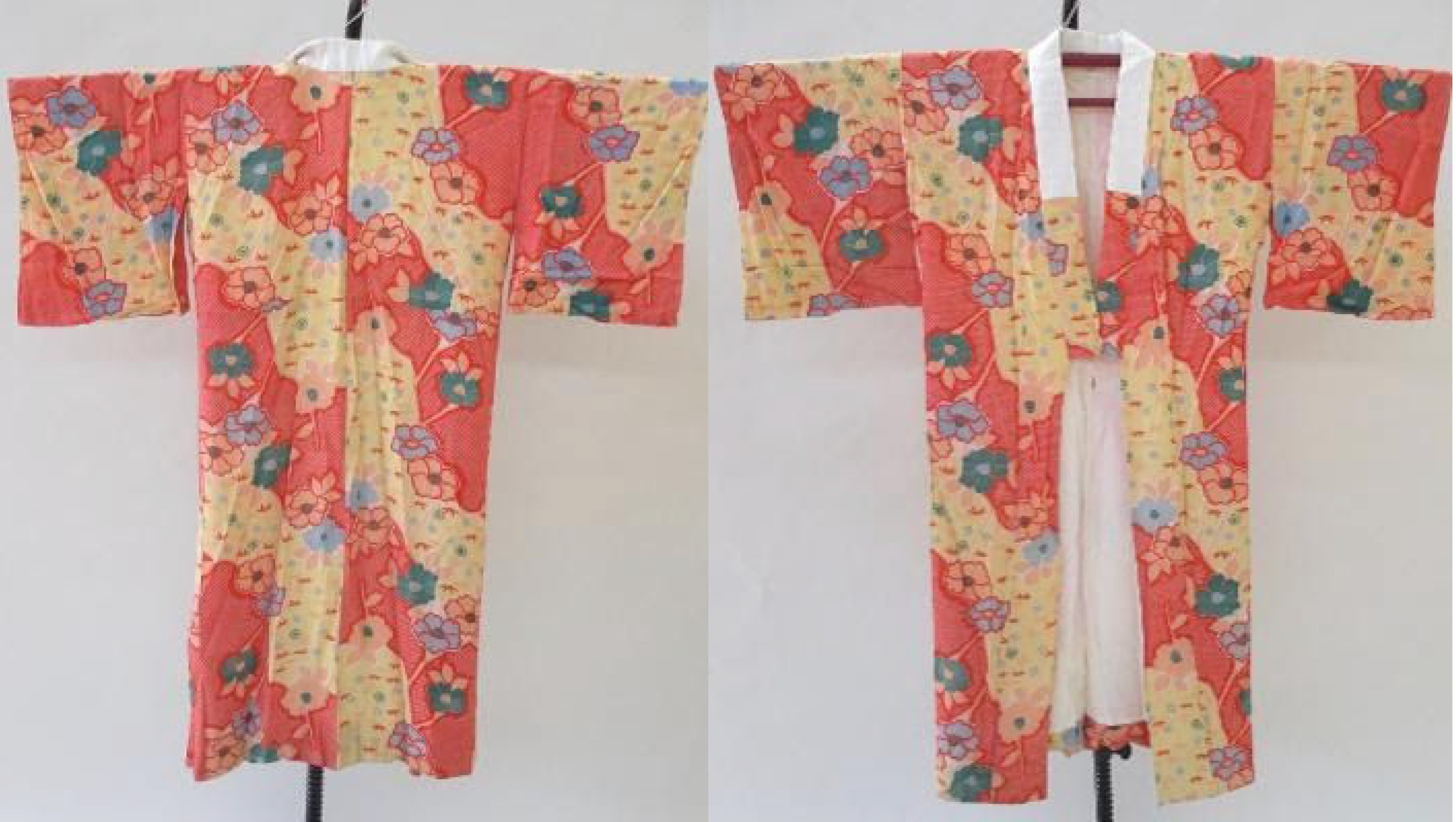 |
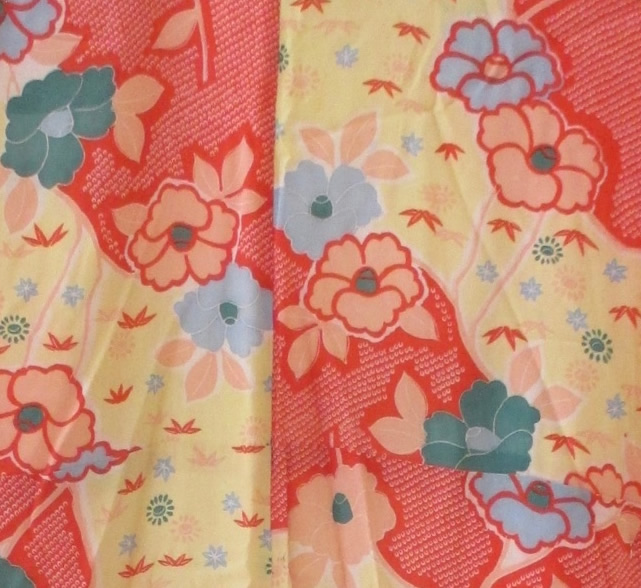
The kosode has a fall color scheme including red, blue, peach, green, and yellow. Although the colors are chosen to create an aesthetically pleasing garment, each color also symbolizes different virtues in Japanese culture. Red, the background color of this garment, represents the dawn, fire, and blood according to many sources. The red maple leaves on the indicate the end of summer and the change of the seasons. Close scruting makes it apparent that the branches of the plum tree are red and textured with a fine white pattern which mitigates the vibrancy of the red dye making it look like a dark peach color. White is also an important color in Japan, symbolizing purity, truth and new beginnings. The two colors used togethersymbolize the changing season and could also symbolize that a young woman wearing it is entering a new season of life.
Green is considered a lucky color, symbolic of nature, health, youth, and energy, making it appropriate to incorporate into this garment. The blue and peach plum blossoms are thickly outlined by the red of the branches, but not the green plum blossoms which are simply outlined by white. The green flowers provide contrast and a reminder of the season that is passing.
Figure 2: Pattern Detail |
Figure 3: Lining Detail |
 |
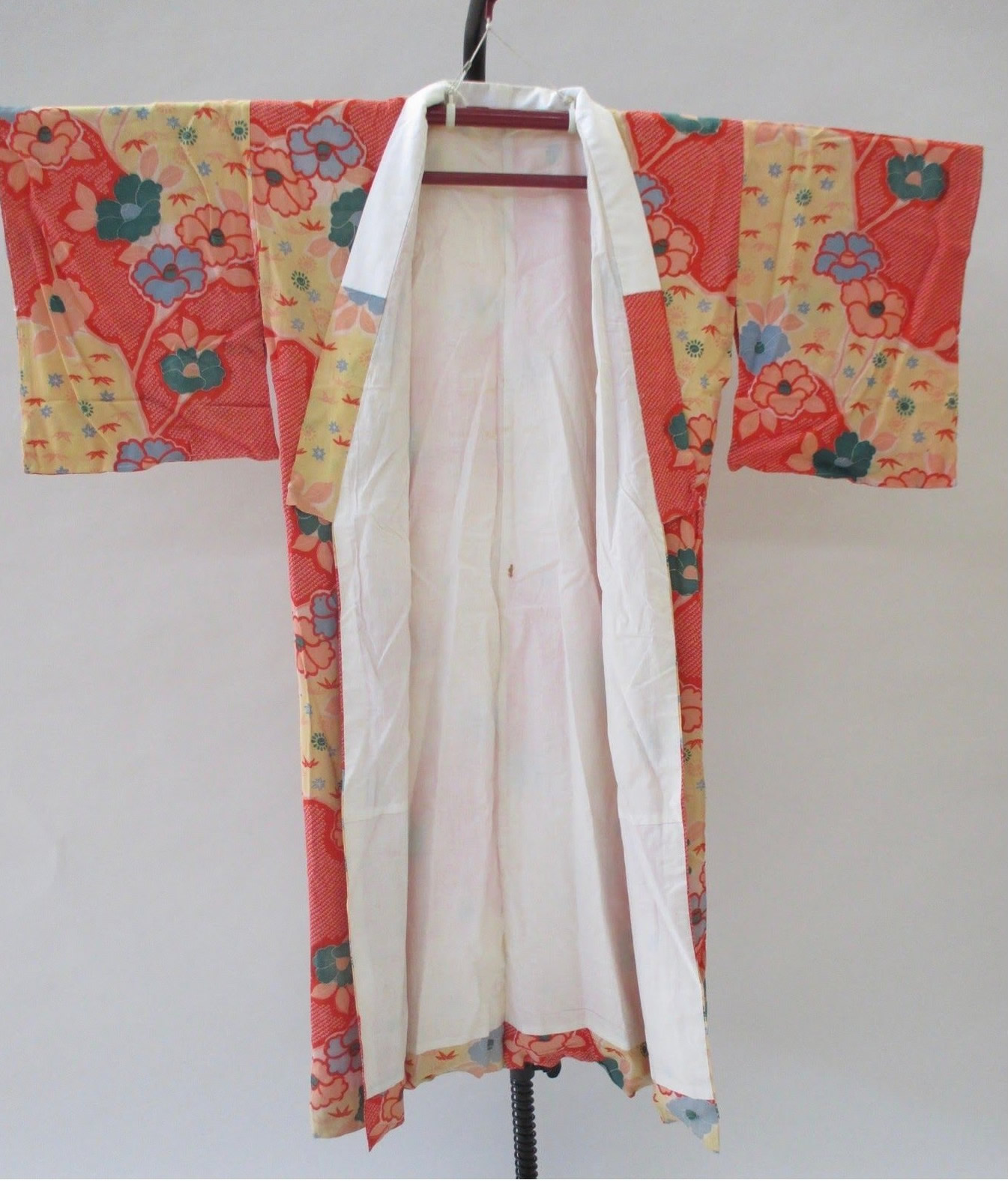 |
The body of the kosode is lined with cream silk while the sleeves are lined with self-fabric. Center back of the garment is not as carefully aligned as might occur with a hand-dyed garment indicating that this one was more recently manufactured.
© Lori Egan, 2020