
T
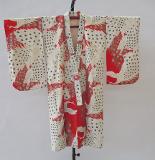
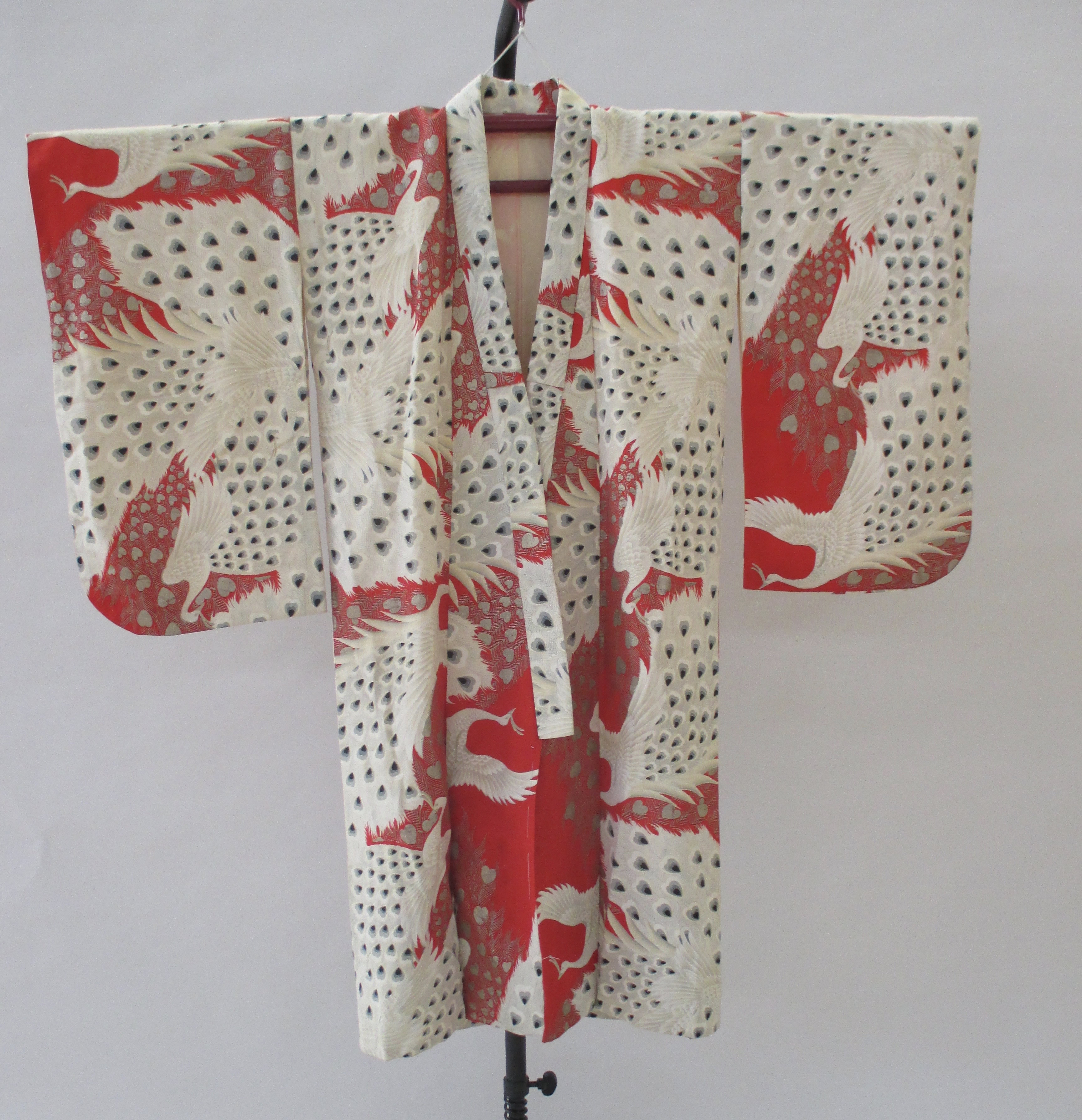
Figure 1: Front |
Figure 2: Back |
 |
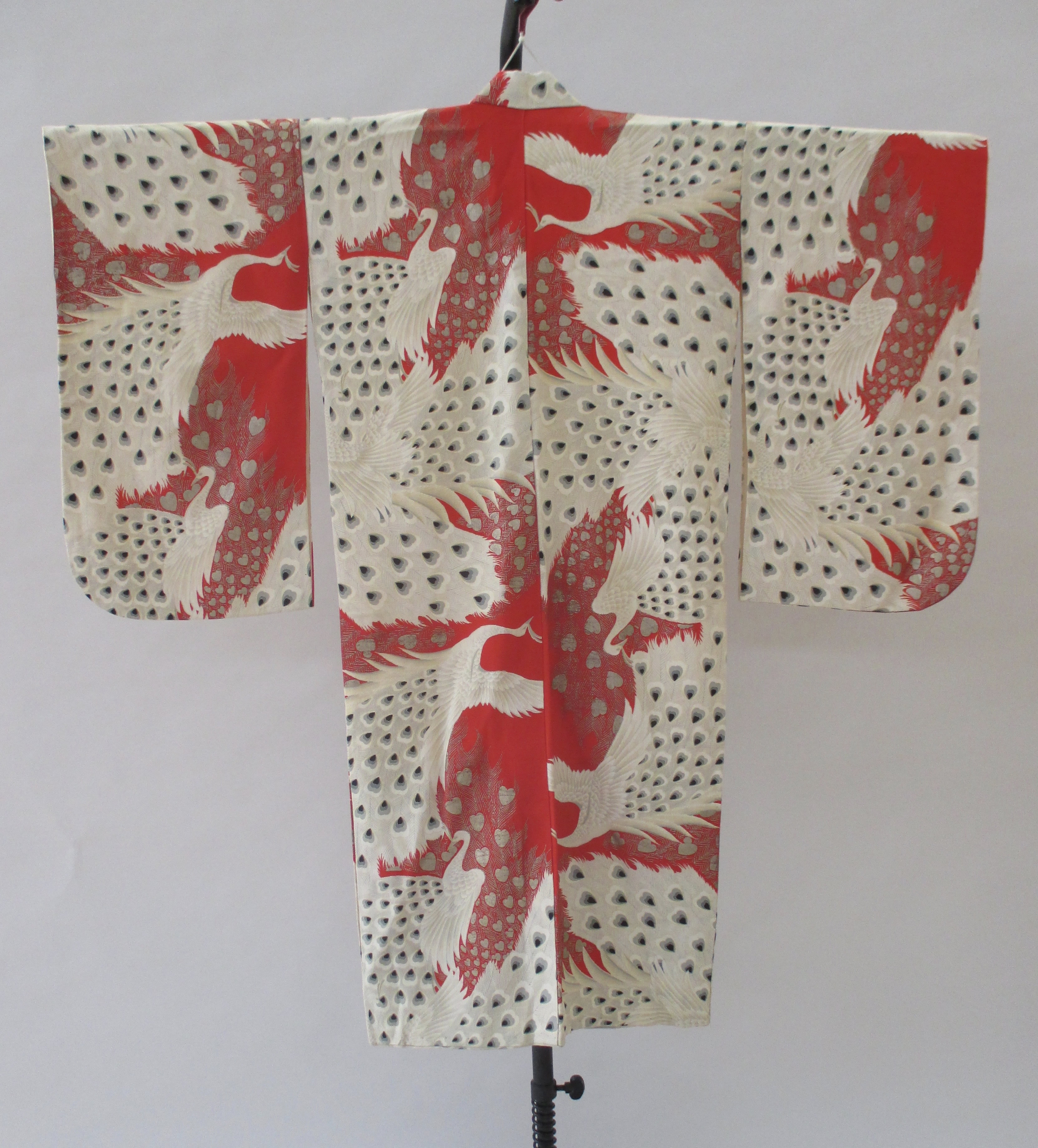 |
he kosode patterned with peacocks, seen above in Figures 1 and 2, is painted with a pattern of cream-colored birds that have blue hearts speckled in their feathers against a red background.
The kosode is completely made by hand from from cream double ply silk crepe. It has been dyed and the red areas were further adorned with metallic gold hearts. The top portion of the inside is lined with cream silk broadcloth; the bottom is unlined. The facing around the 8 1/2" opening is pale yellow silk brocade. The sleeves measure 23 1/2" long and have a curved outer edge. Center back measures 46" long. Additionally, the inside edge of the sode-guchi or sleeve mouth is lined with luxurious white silk damask. Pale yellow thread, the same color as the lining, was used for attaching the lining, and red thread was used to finish the seams.
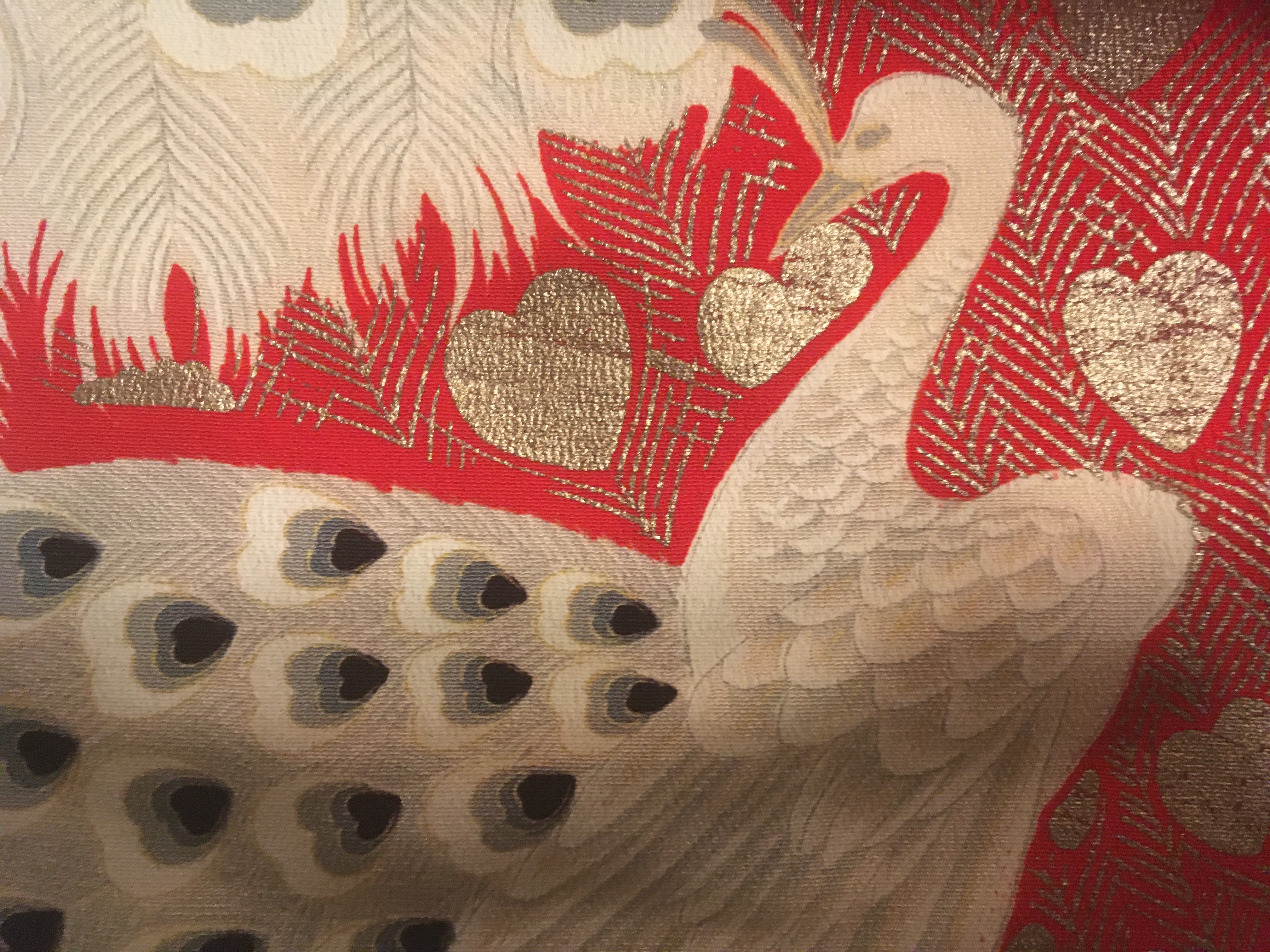
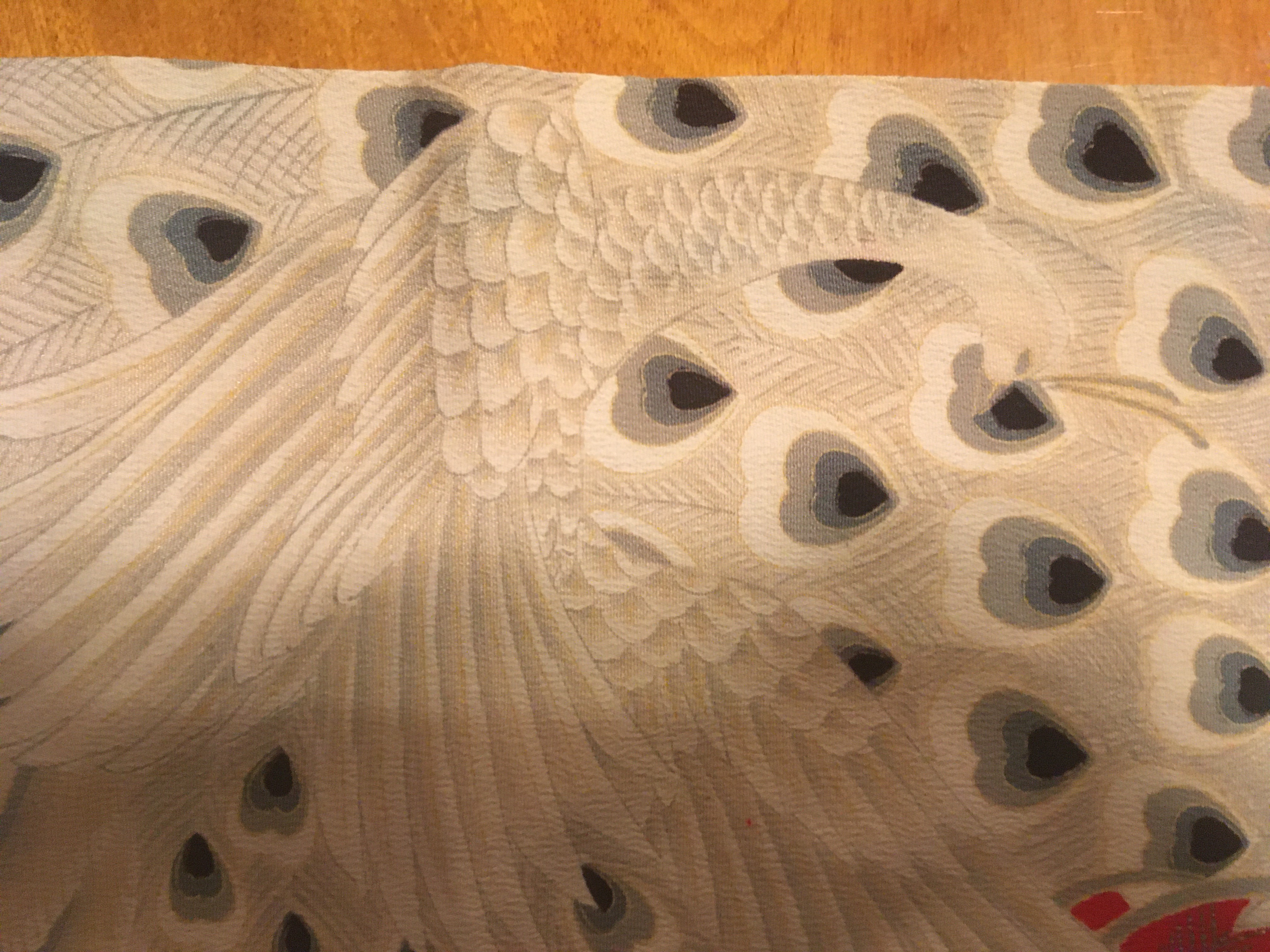
The outer surface of the fabric was decorated with the Yuzen dye method. Following the process of Zen Hand Drawing, a modern, professional dyeing company that uses the Yuzen method, the fabric started as plain light color cloth and had the peacock graphic sketched and/or brushed on. Next glue or rice paste resist was brushed on to entirely cover the positive space of the design (all the peacocks). Then the glue was sprinkled with sawdust and dried to protect the surface of the paste. Next the cloth was wet to increase how well the dye would saturate the fabric after which the negative space or background color of the kosode was brushed on. In this case, it would be the red surrounding the peacocks. After drying and steaming, the cloth is washed in a river-like stream of water to remove any excess dye and paste that had previously been brushed on the design, leaving only thin outlines. Thus there would be a clear, outlined, uncolored subject and dyed negative space. The peacocks would then be individually painted with their body feathers being a combination of three different colors in various gradients (in combination with the base fabric color) in order to create an impression of white dove-like feathers, as can be seen in Figure 3 below. A similar process would follow with the light tail feathers (see Figure 4 below) but includes a darker gradient for the eyes of the feathers and very delicate lines (that might have been sketched on at the beginning) to create a feather-like texture and edge. The last part of the paint process would be the metallic gold feathers which are painted over the red negative space and over some white feathers (see Figure 3 below). The final part of the process would include color correction, water treatment, and the construction of the garment.
Figure 3: Color Detail |
Figure 4: Feather Detail |
 |
 |
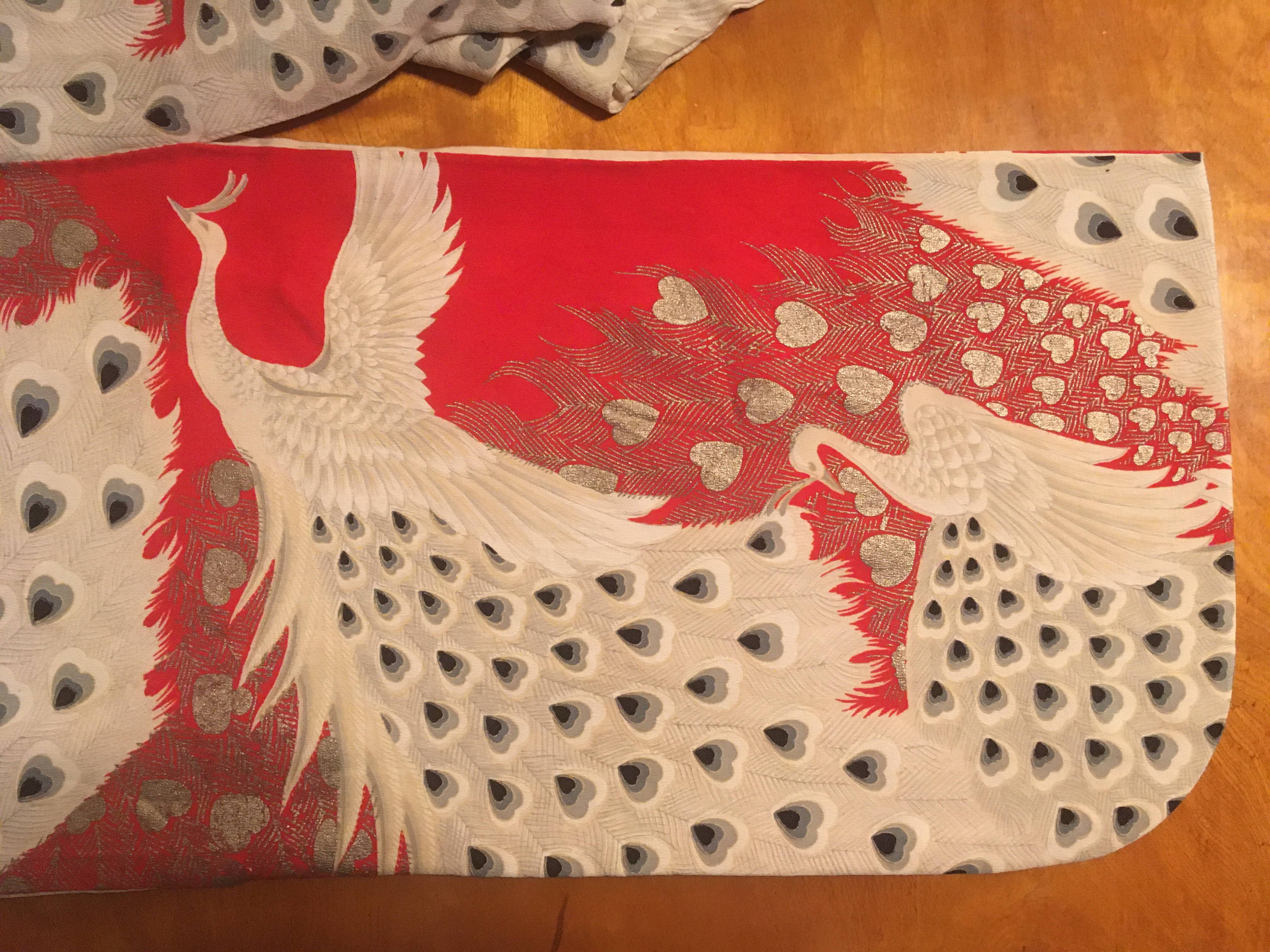
The dyes used for the painting of the fabric can be separated into three categories: the image dye, the background dye, and the gold embellishment paint. The image dye consists of several neutral colors including black, gray, brown, cream, and white. These dyes could have been artificial as artificial dyes were introduced into Japan in the early years of the 20th century. The background dye is a vivid orange red. The red is likely to have been an artificial dye, but it is possible the dye was created from a natural pigment such as the benibana flower which came to Japan in the 3rd to 5th century and is extracted from the deep orange dried blossom leaves of the plant which contain both yellow and red dye according to several sources. The gold embellishment paint is self-explanatory. The use of bright red, the stark red white contrast, and the depiction of numerous, complex peacocks creates a complex, almost garish picture that adheres more to the yabo design principle. Surprisingly, the garment also possesses an element of iki, as the damask fabric lining (more luxurious than the outer fabric) of the sleeve mouth is an example of inward looking fashion. On a side note, the depiction of peacock may be an allusion to the Buddhist goddess Kannon (Japanese name), the pinnacle of mercy, compassion, kindness and love who is sometimes associated with peacocks due to her form being depicted with many arms and eyes according to several sources. Overall, the combination of white feathers and gold feathers painted on red creates a flowing composition that mimics the motion of a peacock opening its tail (see Figure 5 below).
There is a gradual movement created by the painted metallic feathers lessens the stark contrast between peacock and negative space. The combination of long rows of eyes (both regular paint and gold) and long flowing lines accentuates the long, narrow nature of the kosode and further enhances the movements of the peacocks. This flowing graceful flow helps calm the arresting and flamboyant yabo nature of the garment.
Figure 5: Tail Detail |
 |
© Nicholas Nguyen, 2020