
_TN.JPG)
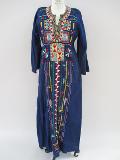
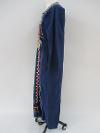
Upon hearing the phrase "Egyptian dress," most people imagine the robes seen in hieroglyphics and film depictions of ancient Egypt. The association is understandable because ancient Egypt has been widely popularized, and little attention is paid to the dress of modern Egypt. In addition, there is no equivalent of national dress in modern-day Egypt. The closest to a national dress is the Egyptian galabeyya. The galebeyya was originally worn by peasants and remains closely associated with them. It is more often associated with men, although it is worn by both men and women. Patricia R. Anawalt on page 57 of her book, The Worldwide History of Dress, defines galabeyya as a “basic garment for the average man or woman … an ankle-length, long sleeved, loose shirt." The galabeyya seen in Figures 1 and 2 is intended to be worn by a woman. A woman wearing it would be considered to be dressed modestly, although the keyhole neckline reaches quite low.
Figure 1: Front |
Figure 2: Back |
 |
 |
The popularization and availability of galabeyya is due in part to foreign consumers searching for so-called “ethnic chic.” Folk dress like galabeyya and abaya (a full-length outer garment) can be found in street markets and in high end shops. Their cost and quality varies widely; they can be sold to tourists or exported.
The galabeyya pictured above is made of medium-weight cotton, a common choice because it is an inexpensive and popular fabric that is also breathable. The color is due to the cotton being dyed with indigo through a wet application process, leaving it a deep, but not shiny, blue. It measures sixty inches along the bottom hemline and thirty-eight inches around the natural waist position. The woman wearing it would be slender and stand about five foot four inches tall. The galabeyya measures 55" long from shoulder to hem. The garment would hang somewhat loosely and reach the ankles, not quite at the floor. The sleeves flare out to be eleven inches around at the bottom edge. as can be seen in Figure 5 below. The pockets, which span the side seams, indicate that it might be more expensive than the average galabeyya.
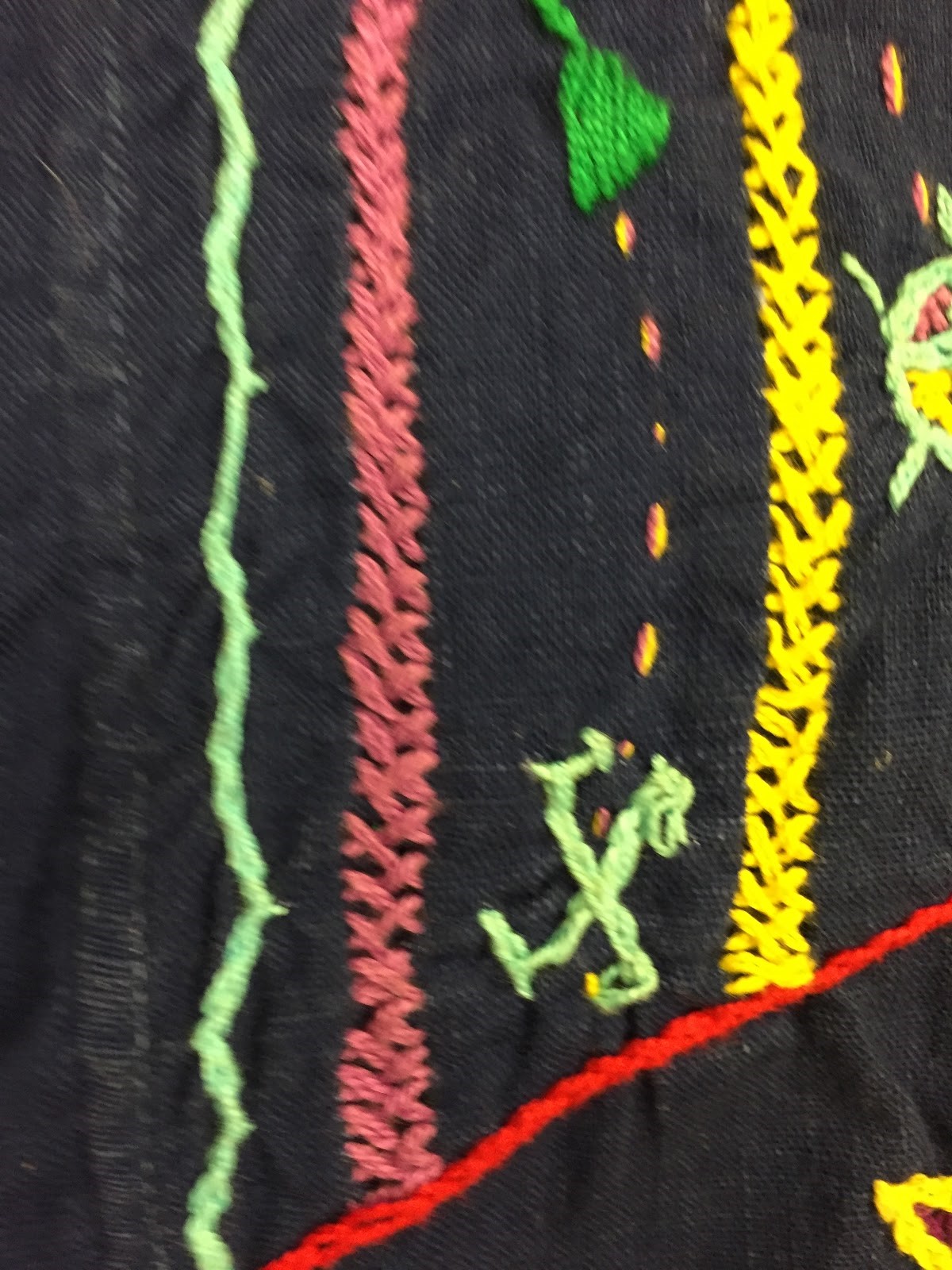
The most prominent feature of the galabeyya, as seen in Figure 3 and 4 below, is the hand-stitched embroidery worked in cotton floss; the imperfections confirm that it was done by hand rather than machine. The symmetry common in galabeyya designs is apparent. Bold and bright colors, in contrast to the blue ground color, create large geometric designs as well as some distinguishable shapes.
Two pinwheels are prominent at the natural waist, as can be seen in Figure 3 below. Ankh, a common symbol in Egypt, is featured in the embroidery as are other crossed shapes. The embroidery depicts objects from daily life, like palm trees and a boat sitting in water at the bottom center. The inside of the garment beneath the embroidered panel is not neat and indicates that the embroidery was quickly done. The floss "floats" in many places where the person sewing it did not make a knot to end a series of stitches but rather extended the floss to the next area where the same color was used. Chain, cross, and satin embroidery stitches can all be seen in Figure 4 below. There is also a horizontal section embroidered in the waist area (see Figure 3 below) that imitates the shape of the waist and long vertical lines running down the length of the skirt, elongating it (see Figure 5 below). In addition, the four buttons that form the closure were made from the same cotton floss as were the braided loops through which they pass.
It is possible that this galabeyya is a Kerdasa garment. It was purchased in a street market in Cairo in 1976, not long before Kerdasa embroidery became widely available in the early 1980s. The shape of the garment, as well as the colors and patterns are also similar to Kerdasa galabeyyas. The waist area and long vertical lines are also consistent with Kerdasa forms.
Figure 3: Embroidery Elements |
Figure 4: Embroidery Stitches |
.JPG) |
 |
The galabeyya was embroidered in panels before they were stitched together to form the garment, as evidenced by the way that a few floats, or free ends of embroidery threads, are caught in the seams. In the Kerdasa process, pre-cut panels were provided to female embroiderers who decorated them for low wages after which male family members made the galabeyyas for direct sale or for merchants to sell locally or in markets in Cairo.
Figure 5: Sleeve Detail |
 |
© Alex Reinhart, 2017