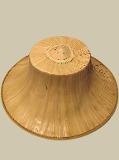

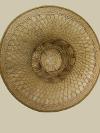
Figure 1: Ngob |
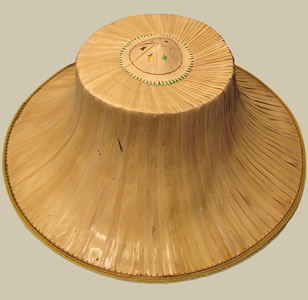 |
The hat shown in Figure 1 above a ngob (alternately ngop or ngo ngob) and it originates in Thailand. Worn by farmers and laborers, it is common in the Central Province of Thailand, though it is easy to find anywhere in the country. These conical hats are usually seen atop the heads of rice farmers working in the paddies.
This ngob in the NowesArk Collection is modern, apparent from the quality and color of the material (dried palm and bamboo tend to darken and soften with time and exposure). It is made from leaves of palm that have been woven together and folded over top of each other in vertical folds. The folds go all the way from the rim of the wing all the way to the top of the crown where they are carefully curled inward through a hole in the center of the top. These strips make up the top outer layer of the hat’s unique body and wing. By looking carefully, one can see that the fronds have been coated, creating a a shiny finish, to help make it waterproof as a means to keep rainwater off of the head and face.
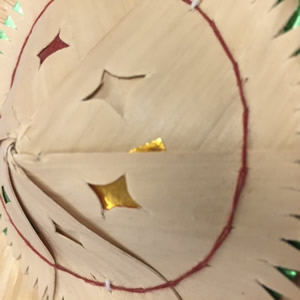
In the middle of the top of the hat lies a small almost dome-like hexagonal crown made of similar palm leaves folded together into six regular triangular faces. This element covers the small hole that is left in the top of the ngob when the body is made. On each face of the crown, a four pointed star shape has been cut out and a pieces of colored foil have been slipped underneath to provide extra decoration (although some of them are missing). A red thread has been sewn around the middle of the crown’s slope and the edge of the crown has also been cut to form rough points. Underneath this frill, another piece of green foil has been attached underneath. These elements are decorative and are rarely seen on the ngob worn by farmers in rice paddies.
Figure 2: Crown Detail |
 |
To maintain the circular shape of the rim, two long thin pieces of bamboo have been bent into shape and sewn into place using waxed cord. This yellow cord has been treated to make it stiff and hold its shape.
Figure 1: Detail of Edge from Inside |
Figure 2: Detail of Edge from Outside |
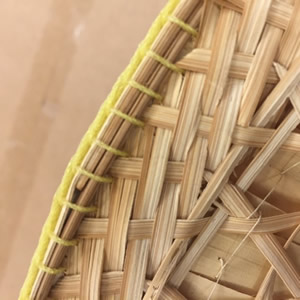 |
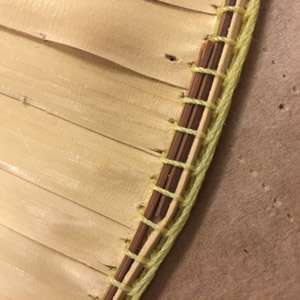 |
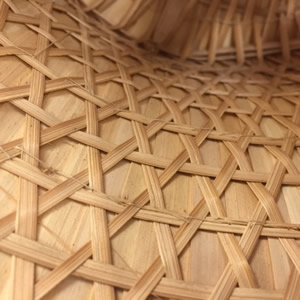
The inner structure of the body of the hat is made from very thin, almost wire-like strips of bamboo woven in a basket pattern that gives solid structural support to the hat and suggests movement through the shape and curve of the weave. Upon close inspection, one can see that the palm leaves from the outside have been attached to the inner structure by nylon thread. The palms are attached at regular intervals culminating at the crown.
Figure 4: Detail of Weave on Interior |
 |
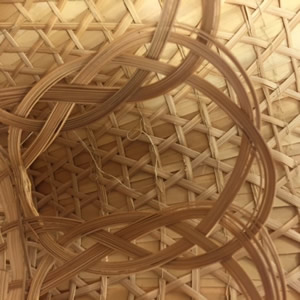
The only other notable structure and a unique part of this hat is the woven inverted basket structure that hangs down from the top of the inside. This structure is called a rang, which translates from the Thai language as nest. This is the part of the hat that actually rests on the head. The rang is made from the same thin strips of bamboo that are used for the inner structure, but these are woven loosely together in an elaborate shape. It is attached to the inside of the hat by two thick pieces of bamboo, sharpened at the ends which cross over each other and slip through the loose strips of bamboo making up the rang. These strips are sewn into the top crown piece with nylon thread to keep them secure and prevent them (and the rang) from coming loose from the rest of the ngob.
Figure 5: Detail of Rang |
 |
This rang structure is a defining feature of the ngob specifically engineered for the blazing heat typical of Thai farms and rice paddies. The rang fits comfortably on the head while simultaneously keeping the scalp from touching the hat itself providing natural ventilation that keeps the wearer cool under the hot sun. This is an incredibly important innovation because the human body uses the thinner skin of the scalp to vent excess heat. Thick hats can create unwanted insulation that prevents this natural process from happening and can cause unhealthy side effects. Going without proper ventilation can lead to serious problems like heat stroke or heat exhaustion if someone is working hard in a hot or humid environment for too long. The ventilation of the ngob seems a perfect solution to a potentially dangerous risk.
As per tradition, this ngob was most likely crafted by a woman, perhaps a farmer herself or a farmer’s wife. It would have been made for the express purpose of being worn while working in the rice paddies or another farm on hot days to keep the sun away and stay cool, though the unique decoration may mean that it was given as a gift. Either the giver could have made the colored stars and sewn on the red thread as a special gesture, or the receiver may have made them to personalize the item and stand out from the crowd.
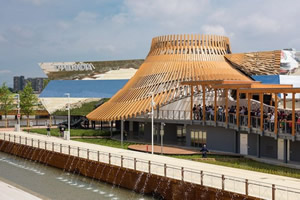
The ngob is such a well known symbol of the Thai people that the shape was recently used for a different purpose. A huge pavilion bearing both the name and the shape of the iconic farmers’ headwear, the Ngob Thai Pavilion, was Thailand’s submission for the Expo Milano 2015, also known as the 2015 World’s Fair hosted in Milan, Italy. This worldwide expo was meant to encourage each participant country to build a pavilion celebrating their unique culture while also following the theme of “Feeding the Planet, Energy for Life.” The outer structure of the pavilion matches the ngob almost exactly, as can be seen in Figure 6 below.
Figure 1: Ngob Thai Pavilion,2015, Milan Italy |
 |
Being an agrarian nation, Thailand’s decision to use the ngob as the definitive Thai symbol was important. It signified that the Thai people are proud of their nation and culture. Thailand is among the largest producers and exporters of rice in the world.
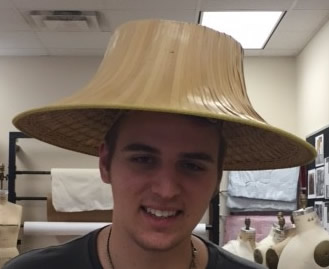
Figure 7: Author in Ngob |
 |
© Bryce Michael Edwards, Class of 2016
Drama 475.001, Spring 2016 Semester
University of North Carolina at Chapel Hill